
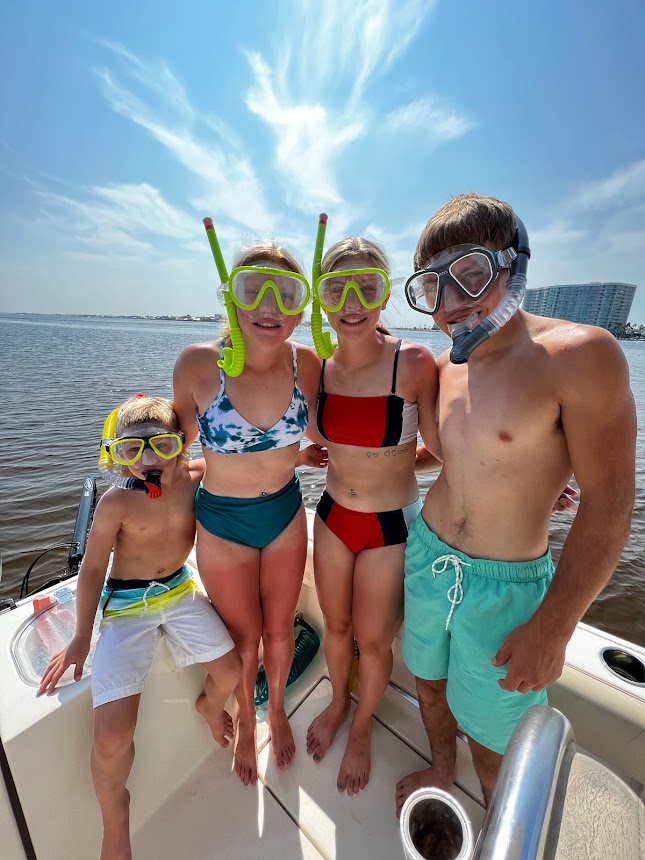
By Captain Matt Swiggum | Back Bay Charters
If you’re planning a snorkeling trip in Orange Beach, Alabama, choosing the right time can make a big difference in your experience.
Most visitors think about snorkeling in terms of the season.
They ask whether June is better than August or whether the water will still be warm enough in September.
Those are good questions, but there’s something else I want you to understand.
The best snorkeling conditions depend just as much on the weather, tides, currents, and recent rainfall as they do on the month of your vacation.
You can have beautiful weather above the surface and poor visibility underwater.
You can also have a relatively cloudy day with suitable water conditions for exploring marine life.
I’m Captain Matt with Back Bay Charters, and I operate private boat trips around Orange Beach.
One of the advantages of spending time on these waterways is developing an appreciation for how quickly conditions can change.
In this guide, I’ll explain the best months for snorkeling, how to think about the tides, when to consider a morning or afternoon departure, and what factors matter most when you’re trying to find suitable snorkeling conditions.
I’ll also explain why there’s no universal rule that says high tide or late morning is always best.
When Is the Best Time to Snorkel in Orange Beach?
For most visitors, June, July, and August are the most practical months to plan snorkeling in Orange Beach, largely because of the warmer water.
May and September can also be excellent options when conditions cooperate.
At Back Bay Charters, our primary snorkeling season runs from May through September.
However, the best month for comfortable swimming isn’t necessarily the month with the clearest visibility.
Here’s how I would evaluate your options.
| Month | General snorkeling outlook | What to consider |
|---|---|---|
| May | Beginning of the main season | Warming water, variable spring winds |
| June | Excellent warm-season choice | Warmer water, growing summer crowds |
| July | Popular summer choice | Warm water, heat, thunderstorms |
| August | Popular summer choice | Warm water, changing weather, possible runoff |
| September | Possible late-season choice | Warm water may persist, tropical-weather risk |
| October–April | Outside our main season | Cooler water and more limited trip availability |
The key is remembering that these are seasonal tendencies, not guarantees.
A favorable day in May may provide a better snorkeling experience than a windy or rainy day in July.
Likewise, a sunny August afternoon may look perfect from the beach but have reduced underwater visibility because of sediment stirred up by waves.
Snorkeling in Orange Beach During May
May marks the beginning of our main snorkeling season.
As spring transitions into summer, the water generally begins reaching more comfortable temperatures for swimming.
Depending on the weather, snorkeling opportunities can become increasingly appealing.
Why May Can Be a Good Choice
For families visiting before peak summer crowds arrive, May offers the possibility of enjoying the water with fewer people around than during July.
It’s also a good time to combine coastal sightseeing with other outdoor activities.
What to Watch Out For
Spring winds and passing weather systems can still affect the area.
A calm, favorable day may provide an enjoyable snorkeling experience, while a windy day can create uncomfortable surface conditions or poor visibility.
I wouldn’t assume that every day in late May is suitable.
Check the actual conditions before booking.
For a broader seasonal picture, see our May in Orange Beach guide.
Snorkeling in June: A Strong Summer Option
June is one of the months I’d recommend considering first if you’re planning a family snorkeling vacation.
The water is typically warmer than in early spring, and summer vacation season is underway.
For children who are confident swimmers, that warmer water can make the experience more comfortable.
Why I Like June for Planning
June gives families the opportunity to enjoy snorkeling while leaving room for dolphin cruises, beach time, and other attractions throughout the vacation.
But June isn’t automatically the month with the best visibility.
Wind, waves, recent rainfall, and tidal movement still determine whether a particular location is suitable.
What About Afternoon Thunderstorms?
Summer weather can develop quickly along the Gulf Coast.
Afternoon thunderstorms are an important consideration for outdoor and boating activities.
Even when the morning begins with clear skies, conditions can change later.
This is one reason a responsible captain watches the forecast closely rather than relying only on the weather at departure.
Explore our June in Orange Beach Almanac for more summer travel details.
Snorkeling in July: Warm Water and Peak Vacation Season
July is a popular month for families visiting Orange Beach.
The Gulf is typically warm, the beaches are busy, and summer boating activities are in full swing.
For children who enjoy swimming, July can offer a comfortable time of year to be in the water.
Advantages of July
Warm water is one of the main benefits.
Families also have access to a wide variety of activities, making snorkeling easy to incorporate into a longer vacation.
Challenges of July
Heat, thunderstorms, wind changes, and increased recreational boat traffic can affect a snorkeling outing.
Boat traffic is particularly important because a snorkeling location must provide an appropriate area for people to be in the water.
The clearest-looking water isn’t necessarily the safest place to snorkel.
During peak summer, booking ahead can also be helpful because private charters have limited availability.
Our July in Orange Beach guide covers more of what families can expect.
Snorkeling in August: Still a Good Time to Explore
August remains part of the main snorkeling season.
Water temperatures generally remain warm, which makes swimming and exploring underwater habitats appealing.
However, August falls within the Atlantic hurricane season.
That doesn’t mean every August day has bad conditions, but it does mean weather deserves careful attention.
What Matters Most in August?
Recent storms and rainfall can affect coastal water clarity.
Strong winds may increase wave activity or disturb sediment.
Even after the weather clears, underwater visibility may take time to improve.
My recommendation is to evaluate the forecast and conditions rather than assuming the water will be suitable because it’s August.
Snorkeling in September: Worth Considering, with Flexibility
September can still offer enjoyable snorkeling conditions, particularly earlier in the month.
The water often retains warmth from summer, and vacation crowds may begin thinning after Labor Day.
For visitors who prefer a quieter coastal atmosphere, that can be appealing.
However, September is also within the climatologically active portion of the Atlantic hurricane season.
Tropical systems, heavy rain, and wind can substantially affect boating conditions.
Is September Too Late for Snorkeling?
Not necessarily.
Back Bay Charters’ main snorkeling season includes September.
But I wouldn’t plan a September snorkeling outing without considering the specific weather window.
If conditions aren’t suitable, a dolphin cruise, sightseeing activity, or land-based attraction may be a better choice.
Read our September in Orange Beach guide for seasonal advice.
What Tide Is Best for Snorkeling in Orange Beach?
This is one of the most useful questions to ask—and one of the easiest to oversimplify.
You may have heard that incoming tide is always best for snorkeling.
There is some reasoning behind that advice, but an incoming tide isn’t automatically the best or safest time to snorkel in Orange Beach.
The answer depends on the location.
Incoming Tide and Water Clarity
An incoming, or flood, tide brings water into coastal bays and waterways.
In some locations, this can introduce water with better visibility than the water already present.
That may make an incoming tide appealing for snorkeling.
But the amount of water movement matters.
An incoming tide can also create strong currents, particularly around passes, channels, and narrow waterways.
Even clear water isn’t suitable for recreational snorkeling if the current creates an unsafe situation.
High Tide and Slack Water
Many people assume high tide means the current has stopped.
That’s not always correct.
The timing of slack current—the period when current flow slows or changes direction—doesn’t necessarily coincide exactly with the published time of high or low tide.
Local geography and water movement influence the timing.
A predicted high tide may not correspond with the best conditions at a specific snorkeling location.
Outgoing Tide
An outgoing, or ebb, tide moves water back toward the Gulf.
Depending on recent rainfall and location, outgoing water may carry additional sediment or lower-visibility bay water.
But that isn’t a universal rule.
Some locations may have acceptable conditions on an outgoing tide.
The important question is what’s happening at the actual site.
My Advice About Tides
Don’t choose a snorkeling time based solely on whether the tide chart says incoming, high, or outgoing.
The better approach is to consider:
- Visibility at the intended location
- Actual current strength and direction
- Wind and surface conditions
- Recent rainfall
- Boat traffic and other hazards
- The abilities of the participants
Tide tables provide useful planning information, but they don’t replace evaluating the actual water.
Captain’s recommendation: Favor suitable visibility and manageable current over chasing a particular tide phase.
Is High Tide or Low Tide Better for Snorkeling?
There isn’t a universal answer.
The tide phase can affect depth, visibility, and current in different ways depending on the location.
At one site, a higher water level may provide more depth over shallow structure.
At another, tidal movement may create uncomfortable or unsafe current.
Low tide may expose shallow areas or change the available water depth.
That can make certain locations less suitable.
For families, the safest approach is to use an operator who evaluates the particular location and conditions rather than relying on a blanket rule.
Never enter unfamiliar passes or channels simply because a tide chart appears favorable.
Is Morning or Afternoon Better for Snorkeling?
For Orange Beach, I’d generally consider late morning a practical snorkeling window when weather and water conditions are suitable.
But I wouldn’t claim that late morning always provides the best visibility.
Morning Advantages
During summer, mornings can offer cooler air temperatures and sometimes lighter winds before the afternoon sea breeze develops.
Lighter wind can reduce surface chop, which may help create a more comfortable experience.
However, conditions vary.
An early morning may still be windy, cloudy, or affected by poor water clarity from the previous day.
Late Morning Advantages
As the sun rises higher, more daylight may penetrate the water, depending on cloud cover, water clarity, and the location.
That can make underwater objects easier to see in suitable conditions.
Late morning can also provide comfortable scheduling for families who don’t want an extremely early departure.
At Back Bay Charters, our snorkeling trips are generally offered at 11:30 AM on select days during the main season.
That departure fits our charter schedule, but it isn’t a guarantee that 11:30 AM has the best tide or visibility every day.
Afternoon Considerations
Afternoon snorkeling can be enjoyable when conditions cooperate.
But during summer, stronger sea breezes and thunderstorms sometimes develop later in the day.
A location that was comfortable in the morning may become choppier during the afternoon.
The actual forecast should determine whether an afternoon outing is appropriate.
Does Sunset Offer Good Snorkeling?
For most recreational beginners, I prefer adequate daylight.
Snorkeling depends on being able to see underwater and remain aware of your surroundings.
As daylight decreases, visibility and situational awareness may become more difficult.
A sunset dolphin cruise is a different activity and may be a better choice for guests who want a scenic evening rather than time swimming underwater.
Why Wind Matters More Than Many Visitors Realize
Wind is one of the most important factors when evaluating snorkeling conditions around Orange Beach.
It affects surface chop, waves, and sometimes sediment movement.
Stronger wind may make a location uncomfortable even when the water temperature is ideal.
Wind Direction
Different areas of the coastal waterways provide different levels of protection depending on wind direction.
A location sheltered under one wind pattern may be exposed under another.
That’s one reason the same snorkeling spot won’t necessarily be the best choice every day.
Wind Speed
Light winds often make snorkeling more comfortable.
But there isn’t one wind-speed number that automatically makes every site safe.
A protected location and an exposed Gulf location can behave very differently under the same forecast.
Current, wave direction, participant ability, and other conditions must also be considered.
Recent Wind Conditions
It’s important to look beyond the wind at the moment you’re departing.
Strong winds earlier in the week may have stirred up sediment.
Even if the wind becomes lighter, underwater visibility may remain reduced for a period afterward.
This is why I wouldn’t promise clear water simply because the current forecast looks calm.
How Rainfall Affects Snorkeling Visibility
Orange Beach is surrounded by bays, coastal waterways, and an extensive regional watershed.
Rainfall can affect the water in several ways.
Heavy rain may increase runoff and carry sediment into coastal waters.
This can reduce visibility, particularly in certain bay and nearshore environments.
The effect depends on the amount of rainfall, water movement, location, and time since the rain occurred.
Is Snorkeling Good the Day After Rain?
Sometimes, but not always.
A brief rain shower may have little effect on a particular location.
Several days of heavy rain may create more persistent visibility problems.
Water clarity doesn’t necessarily recover immediately when the sky clears.
Instead of judging conditions only by whether it rained yesterday, consider what happened throughout the surrounding area and how the water has been moving.
This becomes particularly important after large storms or tropical weather systems.
What Water Temperature Is Best for Snorkeling?
Water temperature influences how comfortable people feel during snorkeling.
That’s particularly important for children, beginners, and people who aren’t accustomed to spending time in open water.
For most vacationers, the warmer water of summer is more appealing than the cooler conditions of winter or early spring.
However, comfort varies from person to person.
Wind, time in the water, and the individual’s tolerance for cooler temperatures also matter.
There isn’t one temperature at which everyone will feel comfortable.
At Back Bay Charters, our seasonal schedule reflects the period when snorkeling is generally most appealing for our guests.
That’s May through September, with June, July, and August being the primary summer months.
What About Snorkeling After a Storm?
After a significant storm, snorkeling conditions may change substantially.
Wind and waves can stir up sediment.
Rainfall may affect water clarity and coastal runoff.
Storms can also alter water movement and introduce debris or other hazards.
Even if a storm has passed, the water may not immediately return to suitable conditions.
The appropriate decision depends on the severity of the event and the actual conditions.
Never enter the water during lightning, hazardous surf, or other unsafe weather.
And after hurricanes or tropical storms, follow official advisories and boating restrictions rather than assuming coastal activities have resumed.
How to Know Whether It’s a Good Snorkeling Day
I recommend using a practical decision process instead of focusing on only one factor.
<escape>Step 1: Check the marine forecast.</escape>
Look at the wind, weather, storms, and expected water conditions.
<escape>Step 2: Consider recent rainfall and wind.</escape>
These can affect underwater visibility even when the current weather looks beautiful.
<escape>Step 3: Review tidal movement.</escape>
Consider whether the expected current at the actual snorkeling site is suitable, not just whether the tide is incoming.
<escape>Step 4: Evaluate the participants.</escape>
A location suitable for experienced swimmers may not be appropriate for children or first-time snorkelers.
<escape>Step 5: Make the final decision based on conditions.</escape>
A responsible captain should evaluate the location before allowing an activity to proceed.
If the conditions aren’t suitable, the best decision may be to change the plan.
When I’d Recommend a Dolphin Cruise Instead
There are times when snorkeling simply isn’t the best activity.
Maybe the water clarity is poor.
Maybe the current isn’t appropriate.
Or perhaps the children in your group aren’t confident swimmers.
In those situations, a private dolphin cruise may be a better fit, provided the boating weather itself is suitable.
Guests can remain aboard and enjoy the coastal scenery while watching for wild bottlenose dolphins.
Our standard private dolphin cruises last two hours and accommodate up to six guests.
You can learn more about our private dolphin cruises in Orange Beach.
If you’re still deciding whether snorkeling is the right activity for your vacation, read our Is Snorkeling in Orange Beach Worth It? guide.
That article explains the experience, cost considerations, family suitability, and realistic expectations in more detail.
Planning a Family Day Around Snorkeling
For families visiting Orange Beach, here’s how I’d organize a day around a seasonal snorkeling trip.
Morning: Relax and Prepare
Enjoy breakfast, gather your personal items, and review the weather.
Avoid scheduling another major excursion before your snorkeling departure.
Late Morning: Private Snorkeling Trip
Arrive at the designated meeting location according to your booking confirmation.
Our snorkeling departures are generally scheduled at 11:30 AM on select days during the main season.
Equipment is provided, and children must be at least five years old with appropriate swimming confidence.
The exact location and activity depend on suitable conditions.
Afternoon: Lunch and Downtime
After returning, enjoy lunch at a nearby restaurant or your accommodations.
Spend the afternoon relaxing at the pool or doing something simple.
There’s no need to book another major boating activity the same day.
Evening: Dinner and a Sunset Walk
Enjoy dinner and watch the sunset from shore.
For a longer vacation, save other major experiences for a different day.
Our Perfect Family Vacation in Orange Beach guide includes sample itineraries and other local attractions.
Frequently Asked Questions About Snorkeling Conditions
What is the best month for snorkeling in Orange Beach?
June, July, and August are generally the most practical months for visitors seeking warmer water. May and September can also provide opportunities when conditions cooperate.
What tide is best for snorkeling?
There’s no universally best tide. Incoming water may improve visibility in some locations, but tidal current can also create hazards. The actual site’s current strength and water clarity matter most.
Is snorkeling better at high tide or low tide?
It depends on the location. Tide height affects depth and water movement differently from site to site, so neither high nor low tide is automatically best.
Is incoming tide always clearer?
No. Incoming water may improve visibility at some coastal locations, but clarity depends on water sources, sediment, rainfall, and current conditions.
Is morning or afternoon better for snorkeling?
Morning and late morning can be comfortable during summer, sometimes with lighter winds and good daylight. But actual conditions matter more than the clock.
Why does Back Bay Charters offer 11:30 AM snorkeling departures?
Our snorkeling trips are generally scheduled at 11:30 AM on select days as part of our charter operations. That doesn’t mean every day’s optimal tide or water clarity occurs at 11:30.
Does rain make snorkeling visibility worse?
Heavy rainfall and runoff can reduce visibility in some locations. The effect depends on the amount of rain, recent weather, and coastal water movement.
Is snorkeling good after a storm?
Conditions may remain unsuitable after a storm because of sediment, current, debris, or other hazards. The actual water and official safety information should guide the decision.
How clear is the water in Orange Beach?
Visibility varies significantly. Some days provide favorable conditions for underwater exploration; others are too cloudy for an enjoyable experience. Clear water cannot be guaranteed.
Can children snorkel in Orange Beach?
Yes. Back Bay Charters accepts children ages five and older who have appropriate swimming confidence and can participate safely under suitable conditions.
Is snorkeling available year-round?
Our main snorkeling season is May through September. Winter isn’t generally part of our standard snorkeling offerings.
What if the forecast changes before our trip?
Contact your charter operator and follow the applicable booking and weather policies. Safety decisions should be made based on actual conditions rather than assumptions.
Final Thoughts: The Best Snorkeling Time Is the Right Weather Window
If you’re planning a snorkeling vacation in Orange Beach, start by considering June, July, or August.
Those months generally offer the warmest water and are the main season for our private snorkeling trips.
May and September can also provide enjoyable opportunities.
But I want to emphasize something that matters more than picking one particular month:
A suitable weather and water window is more important than a calendar date or a fixed tide rule.
Wind, recent rain, current, visibility, and the ability of your group all affect whether snorkeling is appropriate.
Incoming tide isn’t always best.
Late morning isn’t always clearest.
And a sunny day doesn’t automatically guarantee good underwater conditions.
If you understand those factors, you’re much more likely to have realistic expectations and choose the right activity for your family.
At Back Bay Charters, we offer private snorkeling trips for up to six guests during the main snorkeling season, with equipment provided and children ages five and older welcome when appropriately prepared.
If snorkeling is part of your Orange Beach vacation plans, I’d be happy to help you experience the local underwater environment when conditions allow.
Ready to plan your trip?
Explore our private snorkeling trips in Orange Beach, Alabama for trip details, availability, and pricing.
Captain Matt Swiggum
Back Bay Charters