
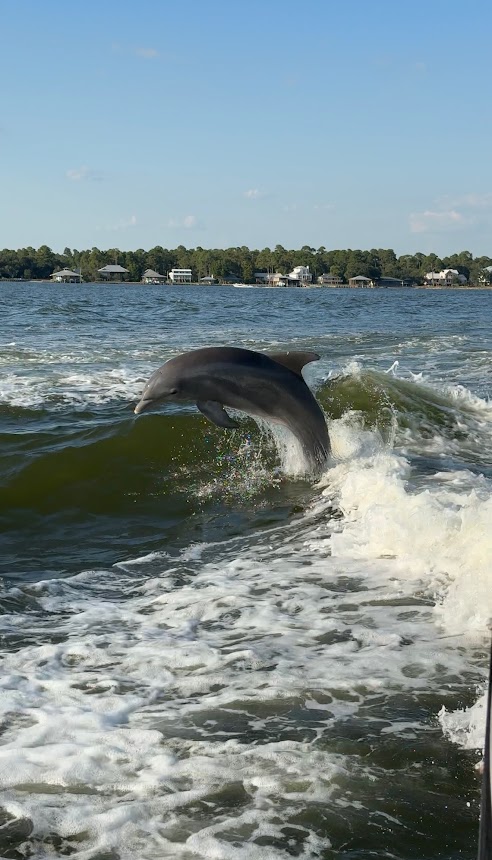
By Captain Matt Swiggum | Back Bay Charters
If you’re planning a dolphin cruise in Orange Beach, Alabama, you’ve probably checked the weather forecast more than once.
Maybe your phone shows clouds on the day of your reservation. Maybe there’s a chance of afternoon rain, or you’re wondering whether the wind will make the boat ride uncomfortable.
One of the most common concerns visitors have is whether their dolphin cruise will still be enjoyable if the weather isn’t perfect.
Here’s what I want you to understand:
You don’t need a cloudless sky to enjoy a dolphin cruise in Orange Beach. But you do need suitable boating conditions, and those are two very different things.
A cloudy day with light wind may provide a pleasant experience on the water. A beautiful sunny day with strong winds, uncomfortable waves, or thunderstorms nearby can be a completely different situation.
I’m Captain Matt with Back Bay Charters, where I operate private dolphin cruises around Orange Beach.
As a captain, I look at much more than whether the forecast shows sunshine.
Wind direction, wind speed, wave conditions, thunderstorms, visibility, and the conditions along the intended route all matter.
In this guide, I’ll explain how weather affects dolphin cruises in Orange Beach, what conditions may lead to cancellations, whether morning is better than afternoon, and how to prepare for a trip when the forecast looks questionable.
Can You Go on a Dolphin Cruise When the Weather Isn’t Perfect?
Yes, sometimes.
A dolphin cruise doesn’t require bright sunshine or completely flat water.
Cloudy skies, cooler temperatures, and some light wind may be perfectly compatible with an enjoyable boating experience.
But the conditions must be suitable for the particular vessel, passengers, and route.
The captain is responsible for evaluating whether it’s appropriate to operate.
Weather Conditions That May Still Allow a Cruise
An overcast sky isn’t automatically a problem.
Light winds may be manageable on an appropriate route, and mild temperatures can make a sightseeing cruise comfortable.
Even a small amount of rain doesn’t necessarily make every boating trip unsafe, provided there is no associated thunderstorm threat and visibility and other conditions remain suitable.
However, that decision should never be made from the rain forecast alone.
Weather That Raises More Serious Concerns
Strong or rapidly increasing winds, hazardous waves, thunderstorms, lightning, and poor navigational visibility are more serious considerations.
A forecast involving tropical weather or dangerous marine conditions requires particular caution.
No reputable operator should continue a cruise simply because guests are eager to go.
My recommendation: Don’t try to decide whether your boat trip is safe based solely on the weather symbol displayed on your phone.
Talk to your captain and consider the actual marine forecast.
1. Wind: One of the Biggest Factors Affecting a Dolphin Cruise
Wind often has a greater effect on the comfort of a boat ride than cloud cover.
As wind moves across the water, it creates waves and surface chop.
The strength of that wind, its direction, and the distance it travels across open water all influence the conditions.
Why Wind Direction Matters
Orange Beach has a combination of bays, protected waterways, channels, and access to the Gulf of Mexico.
A location that’s relatively sheltered from one wind direction may be more exposed when the wind shifts.
For example, a shoreline or island may provide some protection when the wind comes from one direction but offer much less protection when it comes from another.
That’s one reason your captain may choose different routes on different days.
What About Wind Speed?
There isn’t a single wind-speed number that makes every dolphin cruise safe or unsafe.
The appropriate operating limit depends on the vessel, route, waves, currents, passenger considerations, and other conditions.
Wind gusts matter too.
A forecast calling for manageable sustained wind may still contain substantially stronger gusts.
That’s especially important near thunderstorms and weather fronts.
Will a Windy Day Prevent Dolphin Sightings?
Not necessarily.
Dolphins live in these coastal waters throughout the year and don’t disappear simply because the wind increases.
However, stronger wind and surface chop can make spotting dorsal fins more difficult.
Wind can also make the ride uncomfortable or create conditions that prevent the trip from operating safely.
The presence of dolphins isn’t the deciding factor.
Safe boating conditions come first.
2. Gulf Conditions vs. Back Bay Conditions
One advantage of Orange Beach is that there are different types of waterways in the area.
The conditions inside a bay can be very different from conditions in the open Gulf.
That distinction matters when planning a private dolphin cruise.
Conditions in the Gulf
Open Gulf waters are exposed to a larger area over which wind can generate waves.
Swells and other wave activity may also be present even when the wind near the beach appears relatively light.
A forecast for Gulf waters can describe conditions that are significantly different from those inside a sheltered bay.
Conditions in the Back Bays
Coastal bays and certain protected waterways may experience less wave exposure under favorable wind conditions.
That can make an appropriate back-bay route more comfortable on some days.
However, protected doesn’t mean perfectly calm.
Wind can still produce uncomfortable chop, especially across open sections of a bay.
Currents, storms, and vessel traffic can also affect conditions.
Does a Private Cruise Have an Advantage?
A private charter may provide some flexibility in route selection.
At Back Bay Charters, I can consider the conditions along different appropriate waterways when planning a cruise.
But I can’t eliminate bad weather.
A smaller, faster boat doesn’t create safe conditions where they don’t exist.
And if thunderstorms or other hazards make the outing inappropriate, changing the route isn’t necessarily a solution.
Captain’s advice: A comfortable trip depends on selecting suitable conditions and a suitable route—not simply having a smaller boat.
3. Thunderstorms: The Weather I Take Very Seriously
Thunderstorms are one of the most important marine weather hazards along the Alabama Gulf Coast.
They can develop or intensify quickly and may produce lightning, heavy rain, sudden wind gusts, and rapidly changing waves.
A thunderstorm doesn’t need to pass directly over a boat to create danger.
Lightning can strike away from the heaviest rain, and strong winds can arrive ahead of a storm.
What If the Forecast Shows Afternoon Thunderstorms?
During warmer months, thunderstorms can develop later in the day.
However, that doesn’t mean every afternoon is stormy or that every morning is safe.
The forecast needs to be evaluated for the specific day and expected operating area.
If thunderstorms threaten the planned boating window, the appropriate decision may be to postpone or cancel.
Is It Safe to Stay on the Boat During Lightning?
A small open boat is not a safe place to ride out a thunderstorm.
The National Weather Service advises boaters not to venture out when thunderstorms are a threat and to seek port or safe shelter promptly if threatening weather develops while underway.
If you see growing storm clouds, lightning, or other signs of an approaching thunderstorm, don’t assume there’s plenty of time simply because the rain hasn’t reached you.
You can read the National Weather Service’s boating and thunderstorm guidance for more details.
What Happens if a Storm Develops During the Trip?
The captain must assess the situation and take appropriate safety action.
That may involve returning toward port or seeking suitable shelter.
The appropriate response depends on the storm, location, distance from safety, and conditions.
Safety takes priority over completing the scheduled sightseeing route or finding dolphins.
4. Can Dolphin Cruises Run on Cloudy Days?
Absolutely, when the marine conditions are suitable.
Cloud cover alone doesn’t make a dolphin cruise unsafe.
In fact, some guests may find a cloudy day more comfortable than a bright summer afternoon.
Why Cloud Cover Can Be Comfortable
Clouds can reduce direct sun exposure and make air temperatures feel more comfortable.
That’s particularly appealing during the hottest months, when time spent in direct sunlight can become tiring.
Less direct sunshine may also reduce glare under certain lighting conditions.
However, cloudy skies don’t automatically mean better visibility into the water.
Viewing conditions depend on light angle, reflection, surface texture, and other factors.
Are Dolphins More Active on Cloudy Days?
I wouldn’t promise that.
Dolphin behavior is influenced by many natural factors, including feeding and movement patterns.
Cloud cover alone isn’t a dependable way to predict where dolphins will be.
Bottlenose dolphins can be observed throughout the day in different weather conditions.
The key is having suitable boating conditions and realistic expectations.
5. What About Light Rain?
Light rain isn’t necessarily the same thing as hazardous weather.
A small shower without lightning or other dangerous conditions may have a greater effect on passenger comfort than on the ability to operate a vessel.
But there’s an important distinction between isolated light rain and rain associated with a developing storm.
Rain Can Affect Visibility
Heavy rain can make navigation more difficult.
It may reduce the captain’s ability to see other vessels, navigation markers, and obstacles.
That’s especially important around busy channels and marinas.
Rain Can Also Affect Comfort
Most people don’t book a dolphin cruise because they want to sit in the rain.
Even when conditions are safe, uncomfortable weather can affect the overall experience.
A reputable operator should communicate clearly about what to expect and whether the trip remains appropriate.
Does Rain Mean the Dolphins Won’t Be There?
No.
Wild dolphins continue living and moving through the waterways regardless of whether it’s raining.
However, wildlife presence and boating suitability are separate questions.
A captain should never continue into hazardous weather simply because dolphins may be nearby.
6. Is Morning the Best Time for Calm Water?
During the summer, mornings can be a good time to consider a dolphin cruise.
But I wouldn’t tell someone that 9:00 AM is always the calmest departure.
Weather doesn’t follow a fixed daily schedule.
9:00 AM Dolphin Cruises
At Back Bay Charters, 9:00 AM is one of our regular departure times.
On many summer days, morning may offer more comfortable air temperatures and sometimes lighter wind.
For families with younger children, the timing may also fit well before lunch and afternoon naps.
But an approaching weather system can make morning conditions unsuitable.
11:30 AM Dolphin Cruises
Our 11:30 AM departure is convenient for families who prefer a slower start.
By late morning during summer, temperatures may be higher and wind conditions may be changing.
The actual forecast determines whether the trip is comfortable.
2:00 PM Dolphin Cruises
Our afternoon departure can be an excellent option when conditions cooperate.
However, summer thunderstorms and stronger sea breezes can sometimes become important considerations later in the day.
That doesn’t mean afternoon dolphin cruises are automatically worse.
It means they need the same careful weather evaluation as any other departure.
Sunset Dolphin Cruises
Sunset cruises are popular for their evening scenery.
Some evenings are beautiful and calm.
Others are windy, cloudy, or affected by thunderstorms.
A later departure doesn’t guarantee smooth water.
Departure times also change throughout the year with sunset.
For a more complete timing comparison, read our Best Time for a Dolphin Cruise in Orange Beach guide.
7. Why a Sunny Forecast Doesn’t Guarantee Calm Water
One of the most common misconceptions visitors have is that sunshine means good boating weather.
A sunny day can still have substantial wind and waves.
That’s because surface conditions depend on wind, wave generation, swell, current, and the surrounding coastal geography.
Weather systems can also produce waves that travel into an area after the strongest winds have moved elsewhere.
A standard weather forecast showing sunny skies doesn’t necessarily describe what’s happening on the water.
What Should You Look at Instead?
For boating, marine forecasts are more informative than a simple weather-app icon.
The National Weather Service provides coastal marine forecasts that include wind direction, wind speed, waves, and weather hazards.
For Orange Beach, the NWS Mobile marine forecast page provides access to forecasts for local coastal waters, bays, and nearby Gulf zones.
I recommend using those forecasts rather than relying exclusively on a general app.
8. How to Read a Marine Forecast Before Your Dolphin Cruise
You don’t have to become a meteorologist to understand the basics.
There are several things worth checking.
Wind Direction and Speed
Look at where the wind is coming from, its sustained speed, and any expected gusts.
Those values help explain whether sections of the intended route may be exposed to uncomfortable conditions.
Wave Heights and Water Conditions
Marine forecasts may describe wave heights and expected conditions in local bays or coastal waters.
Be careful when interpreting wave-height numbers.
An offshore forecast doesn’t automatically describe conditions inside a protected bay.
Likewise, a relatively low average wave-height forecast doesn’t guarantee that every individual wave will be small.
Thunderstorm Forecast
Pay attention to whether showers and thunderstorms are expected, not just the overall chance of precipitation.
The possibility of lightning and sudden wind changes is especially important for boaters.
Marine Advisories and Warnings
The National Weather Service issues marine advisories, warnings, and statements to alert boaters to potentially hazardous conditions.
A Small Craft Advisory indicates conditions that may be hazardous to smaller vessels.
Special Marine Warnings can identify more immediate threats, including dangerous thunderstorm winds.
The exact warning, its geographic area, and timing matter.
Check the Correct Forecast Area
Orange Beach sits near several different marine forecast zones.
The conditions in Perdido Bay, Mobile Bay, and open coastal Gulf waters aren’t necessarily identical.
Use the NWS coastal marine forecast zones for Mobile to find relevant area forecasts.
For passengers, the important next step is discussing any concerns with the charter captain rather than trying to set your own operating limits based on a forecast number.
9. Can Weather Change During a Two-Hour Cruise?
Yes.
The Alabama Gulf Coast can experience changing weather over relatively short periods.
Wind direction may shift.
A sea breeze may strengthen.
A developing thunderstorm may alter conditions quickly.
Cold fronts can also bring significant changes in wind and temperature.
That’s why checking the forecast once several days before departure isn’t enough.
Forecasts Become More Useful as the Trip Approaches
A forecast made a week in advance helps with general vacation planning.
It shouldn’t be treated as a final decision about whether a specific two-hour charter will operate.
As departure approaches, updated marine forecasts, radar, warnings, and actual conditions become more useful.
A captain also has to consider whether conditions are expected to deteriorate during the trip.
The decision isn’t simply whether the water looks comfortable at the dock.
10. What Happens if Weather Causes a Dolphin Cruise Cancellation?
Weather cancellations are an important part of operating any responsible charter business.
Sometimes conditions aren’t appropriate for departure.
Other times, a captain may decide to postpone while waiting for the weather to improve.
The exact process depends on the operator and its booking terms.
What If the Captain Cancels?
Contact the operator or follow the instructions provided with your reservation.
Weather-related rescheduling, credits, or refunds are governed by the company’s applicable policies and the circumstances.
Don’t assume every charter offers identical terms.
What If You Decide to Cancel Because the Forecast Looks Bad?
This is different from the captain determining that a trip cannot operate safely.
Before canceling a reservation yourself, contact the charter company to discuss the forecast and your concerns.
Back Bay Charters has a firm standard 24-hour guest cancellation policy, so it’s important to review the terms in your booking confirmation.
Weather-related operating decisions should be discussed directly with us rather than assuming a weather forecast automatically overrides the policy.
Can a Trip Be Rescheduled Earlier or Later?
That depends on availability, conditions, and the operator’s policies.
A different departure may be possible on some days, but not every schedule can accommodate a change.
I recommend leaving some flexibility in your vacation itinerary, especially if getting out on the water is a priority.
11. Does Bad Weather Affect Dolphin Sightings?
Dolphin sightings and weather are related, but not in the simple way some people think.
Dolphins don’t need sunshine to remain active.
They live in the area’s waterways throughout the year.
But weather can affect the captain’s ability to travel safely, observe the water’s surface, and select an appropriate route.
Wind and Surface Chop
Choppy water can make dorsal fins harder to identify at a distance.
It can also affect passenger comfort.
Heavy Rain and Low Visibility
Heavy rain may reduce the ability to observe wildlife and navigate safely.
Thunderstorms
Threatening thunderstorms may make the trip inappropriate regardless of where dolphins are present.
What About Our Sighting Success Rate?
At Back Bay Charters, we report approximately 99% historical dolphin-sighting success.
That figure reflects past operations; it isn’t a guarantee for every individual charter.
Weather, wildlife movement, and other factors can affect a specific experience.
Even a beautiful, calm day doesn’t guarantee dolphins will appear on command.
12. Is a Private Dolphin Cruise Better in Questionable Weather?
A private charter can have advantages, but it’s important not to overstate them.
With a private cruise, the captain may have some flexibility in planning an appropriate route based on wind direction, sheltered waterways, and passenger considerations.
At Back Bay Charters, our standard private trips accommodate up to six guests and last two hours.
A small group also makes it easier to communicate concerns during the outing.
However, a private cruise isn’t automatically safer or smoother than a large public vessel.
Different boats have different operating characteristics, equipment, and amenities.
Some larger passenger boats may provide more shelter, including cabins or enclosed spaces.
The right choice depends on the actual vessel and conditions.
My advice: Choose your operator based on responsible decision-making, experience, safety equipment, and clear communication—not promises that bad weather won’t matter.
For more advice, read our How to Choose the Best Dolphin Cruise in Orange Beach guide.
13. What Weather Is Best for Families with Young Children?
Comfort matters, particularly when you’re traveling with toddlers or elementary-age children.
A two-hour cruise can feel much longer if someone becomes cold, overheated, or uncomfortable.
Summer Heat
During July and August, sunshine and high temperatures can make extended exposure uncomfortable.
Bring drinking water, sunscreen, and appropriate clothing.
Morning may be more comfortable on some days, but it isn’t a guarantee.
Cooler Weather
Spring, fall, and winter can produce cooler temperatures.
Wind over the water can make conditions feel colder than they did at the marina.
A light jacket or extra layer can be useful.
Rough Water
Some children tolerate boat motion better than others.
If your child is sensitive to motion sickness or unfamiliar with boats, discuss your concerns before booking.
You should also ask about shade, seating, and appropriate life jackets.
A private setting can be helpful for families, but it doesn’t remove weather-related discomfort or safety considerations.
14. What About Dolphin Cruises During Hurricane Season?
The Atlantic hurricane season runs from June 1 through November 30.
That includes much of Orange Beach’s busiest vacation period.
It doesn’t mean dolphin cruises are unsafe throughout those months.
It means tropical weather is an additional factor visitors should monitor.
Tropical Storms and Hurricanes
Approaching tropical systems can bring hazardous winds, seas, rain, surge, and other dangers.
Conditions may deteriorate well before a storm makes landfall.
A small private charter isn’t an alternative to observing tropical-weather warnings.
If a tropical storm or hurricane threatens Orange Beach, follow official forecasts, local emergency guidance, and any evacuation instructions.
Safety and preparation take priority over vacation excursions.
Can Weather Remain Unfavorable After a Storm?
Yes.
Even after the strongest weather has passed, hazards may remain.
Debris, altered navigation conditions, strong currents, damaged infrastructure, and other issues can affect boating.
Don’t assume charters resume immediately because the sky looks clear.
For official storm information, consult the National Hurricane Center.
Our Orange Beach Travel Almanac also discusses the seasonal considerations visitors should keep in mind.
A Practical Weather Checklist Before Your Dolphin Cruise
Here’s how I’d recommend preparing.
Several days before: Check the general forecast and keep your itinerary reasonably flexible.
The day before: Review the marine forecast, especially wind, storms, and any advisories. Check your booking instructions.
The morning of the trip: Look for updates from the operator and follow any departure or weather instructions.
At the marina: Ask questions about conditions, seating, life jackets, and what the captain expects during the trip.
During the cruise: Follow the captain’s instructions, communicate if anyone feels uncomfortable, and remember that wildlife viewing is secondary to safety.
A little planning makes it easier to enjoy your vacation without obsessing over every weather-app update.
A Good Family Itinerary When Weather Is Uncertain
If your vacation includes several outdoor activities, build a schedule that can accommodate weather changes.
Morning: Dolphin Cruise When Conditions Permit
Choose a departure that fits the forecast and your family’s routine.
During summer, a 9:00 AM cruise may be a practical option, but the captain must evaluate the actual conditions.
Midday: Lunch and Rest
Enjoy lunch at a local restaurant such as GTs on the Bay or return to your accommodations.
Afternoon: Keep the Schedule Flexible
If the weather is suitable, enjoy the beach, pool, or The Wharf.
If ordinary rain makes outdoor activities unpleasant, consider an indoor attraction that’s operating safely.
Don’t attempt to travel for entertainment during severe weather, flooding, or official emergency warnings.
Evening: Dinner and a Sunset View
Finish with dinner and enjoy the evening scenery when conditions permit.
There’s no need to schedule another charter just to fill the day.
For more activity ideas, read our Things to Do in Orange Beach Besides the Beach guide.
Frequently Asked Questions About Dolphin Cruise Weather
Do dolphin cruises run when it’s cloudy?
Yes, they can. Cloud cover alone doesn’t make a trip unsafe. Wind, storms, visibility, and actual boating conditions are more important.
Will a dolphin cruise operate in light rain?
Possibly, depending on the conditions and operator. Rain associated with thunderstorms, hazardous winds, or reduced visibility is a different situation.
Do dolphins come out when it rains?
Dolphins live and remain active in coastal waters regardless of ordinary rain. However, weather affects whether people can safely operate a boat and observe them.
What wind speed is too high for a dolphin cruise?
There isn’t one universal cutoff. Vessel design, route, waves, current, gusts, and passenger considerations all matter. The captain must determine whether operating is appropriate.
Are the back bays calmer than the Gulf?
They can be more sheltered under certain wind conditions, but they’re not automatically calm or safe.
Is 9:00 AM the calmest time?
Not always. Morning may offer lighter winds on some summer days, but fronts and storms can make morning conditions unfavorable.
Are sunset dolphin cruises calm?
Sometimes, but calm conditions aren’t guaranteed. Sunset weather depends on the same marine factors as any daytime cruise.
Will my trip be canceled because the forecast shows a chance of rain?
Not necessarily. The actual threat, timing, marine forecast, and operator’s assessment matter more than the rain percentage alone.
Are thunderstorms dangerous for dolphin cruises?
Yes. Lightning, sudden strong winds, and rapidly changing waves can make boating dangerous. A captain should not venture into threatening thunderstorm conditions.
What happens if bad weather develops during the trip?
The captain evaluates the hazard and takes appropriate safety action, which may include returning to port or seeking shelter.
Can private dolphin cruises avoid bad weather?
A private charter may be able to choose a more sheltered route when conditions permit, but it cannot eliminate weather hazards or guarantee a safe trip during dangerous conditions.
Is a sunny day always good for dolphin watching?
No. Sunshine doesn’t guarantee light wind, small waves, or suitable marine conditions.
Will I get a refund if the captain cancels for weather?
That depends on the operator’s applicable booking and weather policies. Review those terms and contact the company before assuming a particular refund or rescheduling outcome.
What’s the best place to check Orange Beach marine weather?
The National Weather Service Mobile marine forecast is a useful official starting point. Your captain should evaluate the latest forecast for the relevant waterways.
Are dolphin cruises available during winter?
Yes. Back Bay Charters offers private dolphin cruises year-round when conditions and availability permit. Winter cold fronts and strong winds can affect scheduling.
Final Thoughts: You Don’t Need Perfect Weather, but You Do Need Suitable Conditions
A dolphin cruise in Orange Beach can be a wonderful experience even when the sky isn’t perfectly clear.
Cloudy weather, cooler temperatures, and manageable winds may still allow an enjoyable trip.
But I’d never recommend choosing a departure based on sunshine alone.
The conditions on the water matter much more than the appearance of the sky.
Wind direction, waves, thunderstorms, visibility, and the location of the intended route all influence whether a cruise is comfortable and safe.
A responsible captain should be willing to make difficult weather decisions, even if that means changing or postponing a trip.
That’s part of operating a professional charter.
At Back Bay Charters, our standard private dolphin cruises last two hours and accommodate up to six guests.
We explore Orange Beach’s coastal waterways while looking for wild dolphins and enjoying the scenery.
Our goal is to provide a personal, enjoyable experience when conditions allow—not to promise that every day on the water will be perfect.
Planning a dolphin cruise in Orange Beach?
Visit our private dolphin cruise booking page for trip details, availability, and booking information.
If you have questions about the weather for your reservation, contact us before making changes to your plans.
We’d love to welcome your family aboard when conditions are right.
Captain Matt Swiggum
Back Bay Charters