
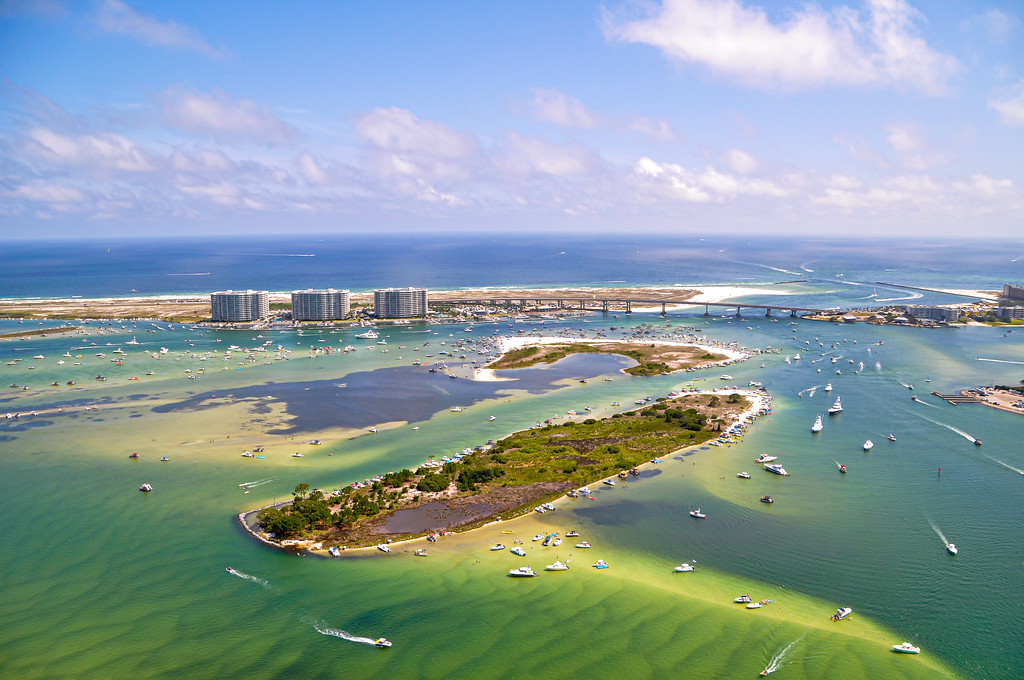
Explore Every Month in Orange Beach
Links to more Articles:
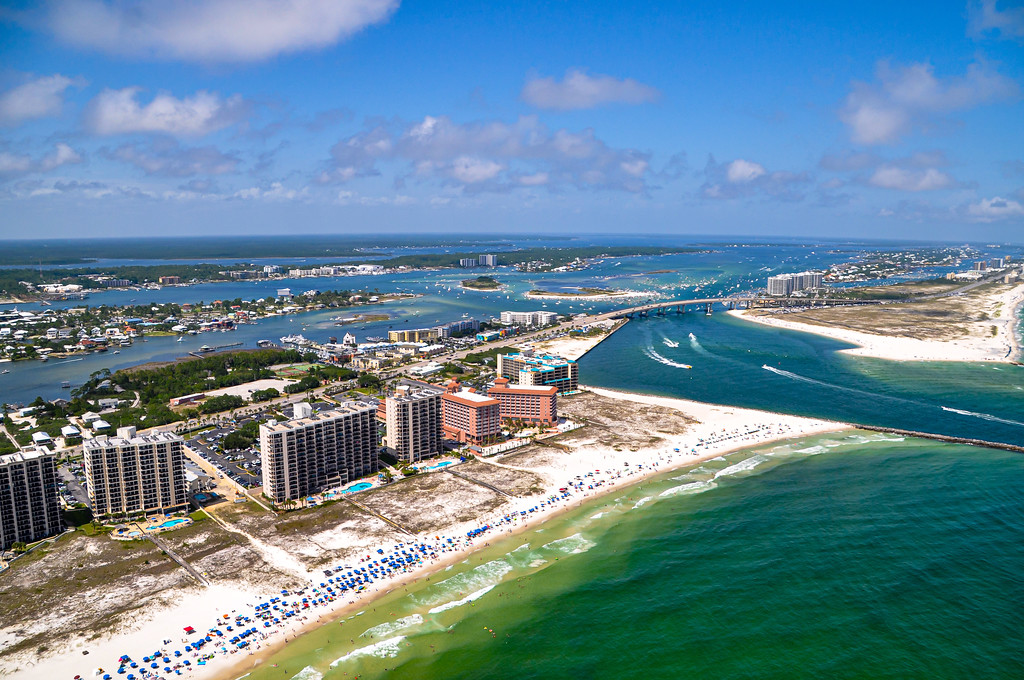
The best time to visit Orange Beach isn’t a date on the calendar.
It’s finding the moment when this stretch of Alabama’s Gulf Coast matches the vacation you’ve been dreaming about.
For some families, that’s a week in July when the kids are out of school, the Gulf is at its warmest, the beaches are full of life, and every day ends with another unforgettable sunset.
For others, it’s a quiet week in September when the water still feels like summer, restaurant wait times become noticeably shorter, and nearly every activity—from fishing and snorkeling to dolphin cruises and Blue Angels practices—is still available.
Maybe you’re planning your very first beach vacation.
Maybe you’ve been coming here for years.
Maybe you’re searching for the best fishing of the season, hoping to spend every afternoon on the beach, or simply looking for a place where life slows down for a few days.
Whatever brings you to Orange Beach, one question almost always comes first.
“When should we come?”
It’s a simple question, but the answer is far more interesting than most travel websites make it seem.
The truth is, there isn’t one perfect month to visit Orange Beach.
That’s one of the reasons so many people return year after year.
Every season offers a completely different experience.
Spring feels like the Gulf Coast waking up after winter. Water temperatures begin climbing, wildlife becomes noticeably more active, and warm sunny days invite everyone back onto the water.
Summer is everything most visitors imagine when they picture Orange Beach—warm Gulf water, busy beaches, family vacations, fresh Gulf seafood, and long days that seem like they never end.
Fall quietly becomes one of the Gulf Coast’s best-kept secrets. The Gulf often stays warm enough for swimming well after Labor Day, while lighter crowds create a slower pace without sacrificing the experiences people travel here to enjoy.
Winter reveals a completely different side of Orange Beach. The beaches become peaceful, sunsets feel even more dramatic, holiday lights reflect across the water, and visitors escaping colder climates often discover why they’ve been returning for decades.
There isn’t a bad time to visit Orange Beach.
There are simply different experiences waiting throughout the year.
The goal of this guide isn’t to tell you which month is best.
It’s to help you discover which month is best for you.
Throughout this guide you’ll find far more than average temperatures and weather charts. We’ll combine verified climate information, local observations, seasonal fishing patterns, wildlife activity, Gulf conditions, and years of on-the-water experience to help you choose the perfect time for your visit.
By the time you finish reading, you won’t just know when to visit Orange Beach.
You’ll understand what it actually feels like to be here.
Finding the Perfect Time to Visit Orange Beach
Ask ten locals when the best time to visit Orange Beach is, and you’ll probably get ten different answers.
The funny thing is… they’d all have a good reason.
Some people love the excitement of July, when the beaches are buzzing with families, the Gulf is as warm as it gets, and every day feels like summer vacation.
Others won’t visit any time except September, when the water is still warm enough to spend the day swimming, but the crowds begin to fade and the pace becomes noticeably more relaxed.
There are anglers who wait all year for spring, when the Gulf comes alive and new fishing opportunities seem to appear every week. Then there are snowbirds who happily trade freezing temperatures for a quiet walk on the beach in January, wondering why they hadn’t discovered Orange Beach years ago.
None of them are wrong.
That’s because there isn’t one perfect month to visit.
There are twelve different versions of Orange Beach.
The trick is figuring out which one matches the vacation you’re planning.
Maybe you’re bringing young kids and want long days building sandcastles, swimming in the Gulf, and making memories that they’ll still talk about years from now.
Maybe you’ve been dreaming about watching dolphins surface beside the boat, snorkeling in clear Gulf water, or spending an afternoon exploring Fort Morgan before ending the day with fresh Gulf seafood overlooking the marina.
Or maybe you’ve spent months planning the fishing trip you’ve always wanted—hoping to catch your first red snapper, watch tarpon rolling just off the beach, or feel a speckled trout explode on a topwater lure as the sun comes up.
Every one of those vacations is possible here.
They just don’t all happen during the same month.
That’s why this guide isn’t built around a single recommendation.
Instead, it’s designed to help you discover the version of Orange Beach that’s right for you.
As we work through each month, we’ll look beyond simple weather averages and explore what it’s actually like to vacation here throughout the year. We’ll compare everything from air and water temperatures to fishing, dolphin activity, Blue Angels practice season, crowd levels, and the little details that can completely change the feel of your trip.
By the time you reach the end of this guide, you won’t just know the weather in every month.
You’ll know what your vacation is likely to feel like before you ever arrive.
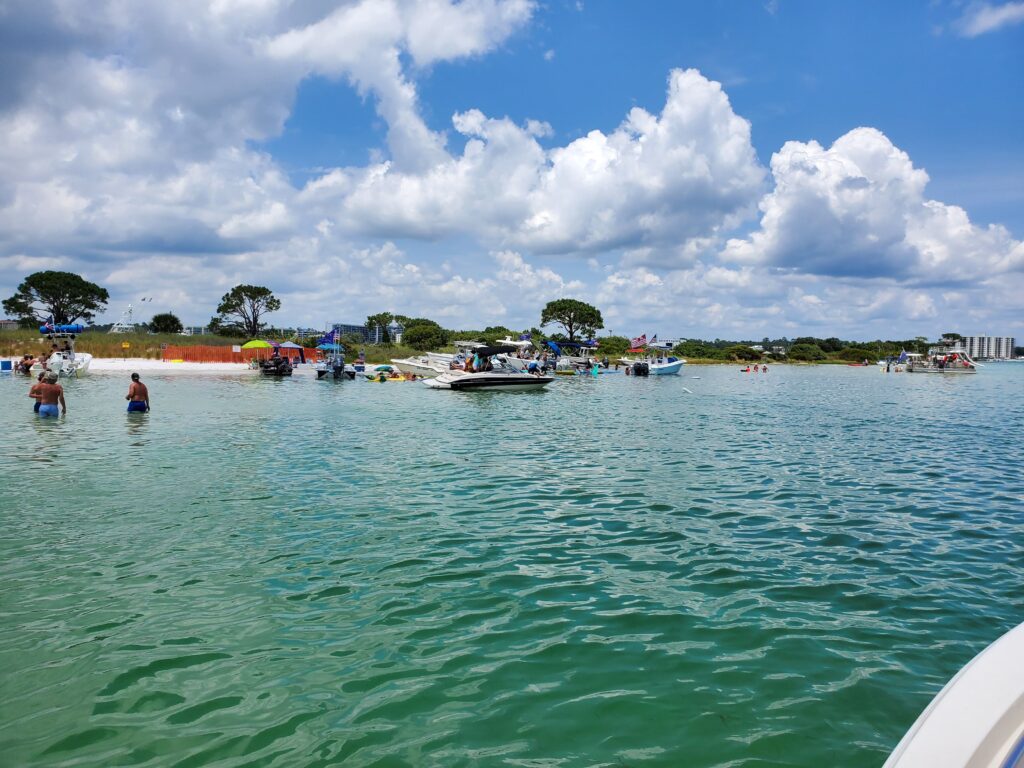
Orange Beach Through the Seasons
At first glance, every month in Orange Beach might seem pretty similar.
The beaches are always here. The Gulf is always close by. And no matter when you visit, you’ll find plenty of reasons to spend your days outside.
Stay a little longer, though, and you’ll realize something locals have known for years.
Every season has its own personality.
That’s one of the reasons so many visitors return year after year. The Orange Beach someone falls in love with during a quiet September getaway feels completely different from the Orange Beach another family experiences during the excitement of July.
Neither vacation is better.
They’re simply different.
Spring is the Gulf Coast waking up.
Warmer afternoons replace cool mornings, water temperatures begin climbing, boats return to the marinas, and every week seems to bring something new. Fishing opportunities expand almost daily, wildlife becomes noticeably more active, dolphins begin spending more time along the beaches, and the entire Gulf Coast comes alive after winter.
Summer is the Orange Beach most people have been dreaming about all year.
The Gulf reaches its warmest temperatures, beach umbrellas begin covering the shoreline, charter boats leave the marinas before sunrise, and families fill their days with dolphin cruises, snorkeling trips, fishing charters, waterfront restaurants, and evenings that somehow never seem long enough. It’s energetic, exciting, and full of the kind of memories that bring people back summer after summer.
Then something begins to change.
Labor Day comes and goes.
Kids head back to school.
Almost overnight, Orange Beach begins to exhale.
Not because there’s less to do.
Because there’s a little more room to enjoy it.
The Gulf still feels like summer. The sunsets remain spectacular. Nearly every activity is still available, but traffic eases, restaurant waits become shorter, and the beaches have room to breathe again. For many visitors with flexible schedules, it’s one of the best times of year to experience Alabama’s Gulf Coast.
Winter tells a quieter story.
The beaches become peaceful, mornings turn crisp, and holiday lights reflecting across local marinas reveal a side of Orange Beach many first-time visitors never expect. While locals may reach for a jacket, visitors escaping colder climates often find themselves enjoying afternoons outside, wondering why they’ve been returning year after year.
Every season offers something worth experiencing.
The secret isn’t finding the best one.
It’s finding the one that feels like your perfect vacation.
That’s exactly what we’re going to help you do next.
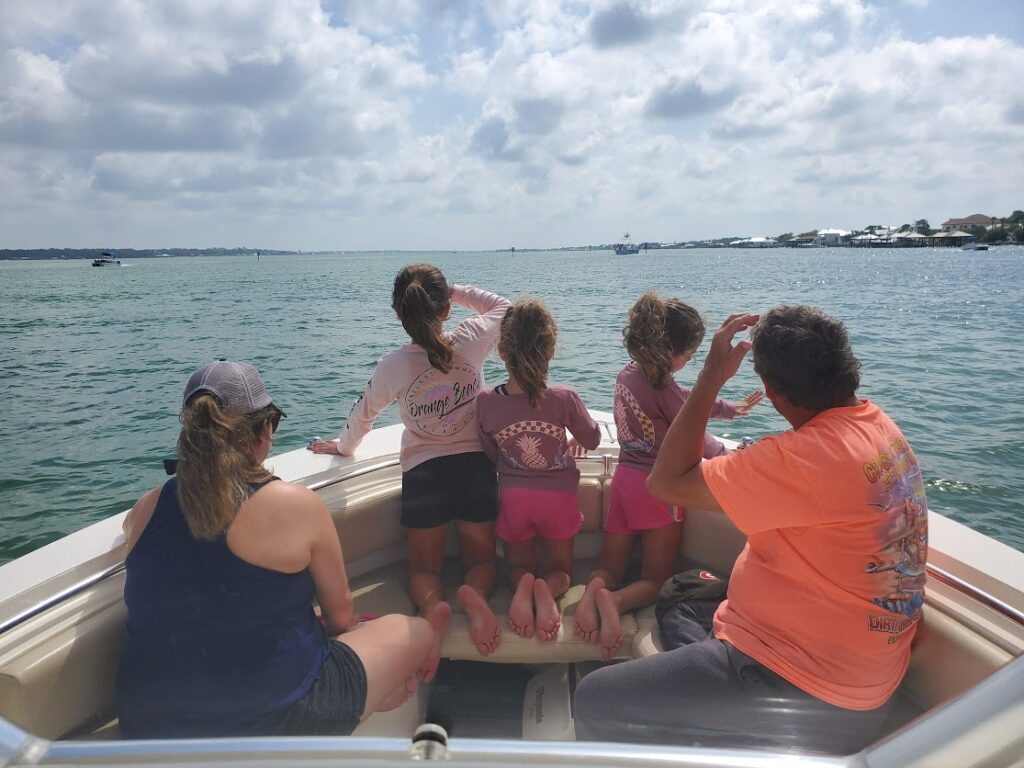
Which Season Fits Your Perfect Vacation?
By now, you’ve probably noticed a theme.
There isn’t one perfect season to visit Orange Beach.
There are simply different versions of the perfect Orange Beach vacation.
Some people come here to spend every possible minute on the beach. Others are planning a fishing trip they’ve dreamed about for years. Some are looking for a quiet getaway, while others are bringing three generations of family together for a week on the Gulf Coast.
None of those vacations are wrong.
They simply call for different times of year.
If one of the vacation styles below sounds like you, you’ll already have a good idea which season you’ll enjoy most before we even start looking at the calendar month by month.
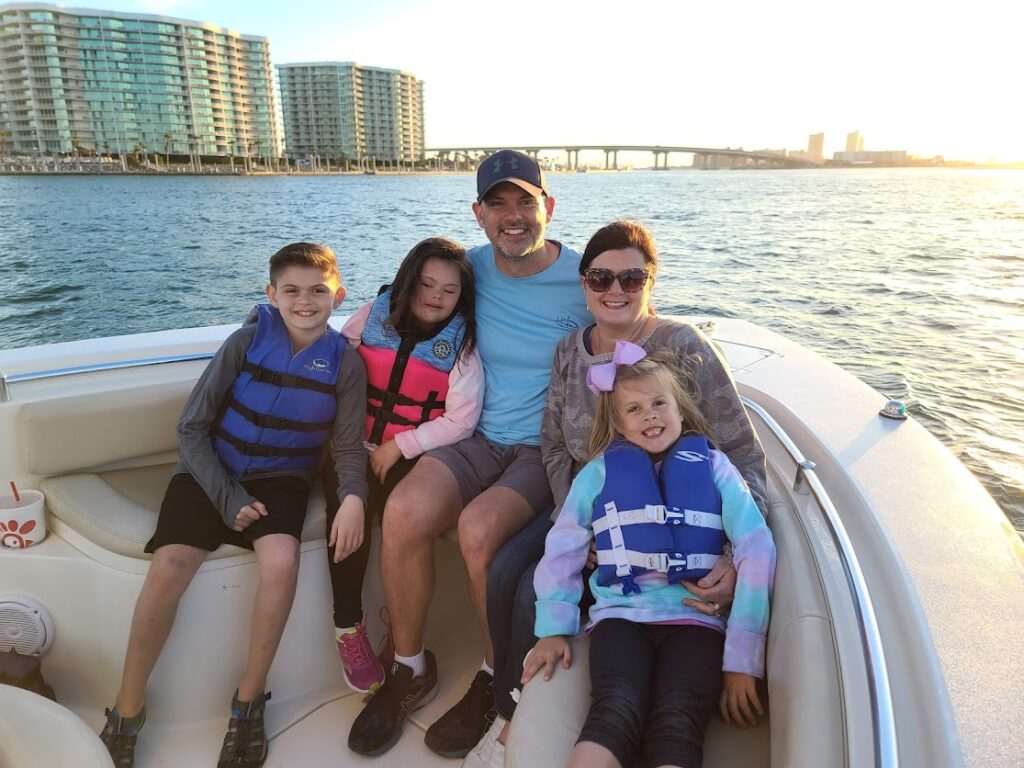
The Classic Family Beach Vacation
For many families, an Orange Beach vacation becomes one of those trips everyone talks about for years.
It’s the first time the kids catch a wave.
The first dolphin they see in the wild.
The first evening everyone stays on the beach just a little longer because nobody wants the day to end.
If that’s the vacation you’re dreaming about, late spring through summer is hard to beat.
The Gulf is warm, nearly every attraction is operating, and your days can be as full—or as relaxed—as you want them to be. One morning might be spent building sandcastles, another snorkeling in the Gulf, another exploring The Wharf, and another watching dolphins from a private boat where the experience revolves around your family instead of a large group.
For many visitors, those smaller, more personal experiences become the memories everyone talks about long after the vacation is over.
Yes, summer is busier.
You’ll wait a little longer at popular restaurants, spend a little more time in traffic, and share the beaches with more families than you would during the quieter months.
For most families, though, that’s simply part of summer at the beach.
The laughter.
The excitement.
The sound of kids running between the water and the sand.
Those moments are exactly why so many families return year after year.
Captain’s Insight
Families often assume a bigger boat creates a better experience.
In reality, many discover the opposite.
Smaller private trips allow the day to move at your family’s pace, giving everyone more time together instead of sharing the experience with dozens of strangers.
Best Seasons: Late Spring • Summer • Early Fall
A Relaxing Couples Getaway
Not every trip to Orange Beach is about packing as much as possible into every day.
Sometimes the best vacations are the ones where life simply slows down.
If you’re planning a romantic getaway, anniversary trip, or long weekend together, Orange Beach has a completely different personality outside the peak of summer.
September and October are our favorite months for couples.
The Gulf still feels wonderfully warm, sunsets arrive a little earlier, restaurant wait times become noticeably shorter, and the beaches offer more room to enjoy a quiet walk along the shoreline. The pace slows just enough that you can appreciate the little moments that often get lost during the busiest weeks of summer.
Start the morning with coffee overlooking the water.
Spend the afternoon on the beach or exploring local shops.
Enjoy fresh Gulf seafood for dinner.
Then end the evening watching the sun disappear below the horizon from the deck of a boat on your own private cruise.
It isn’t about doing more.
It’s about enjoying every moment a little longer.
Captain’s Insight
The most memorable sunsets rarely happen because the sky is perfectly clear.
A few scattered clouds often create the brilliant oranges, pinks, and deep reds that make Gulf Coast sunsets so unforgettable.
Best Seasons: September • October • Early May
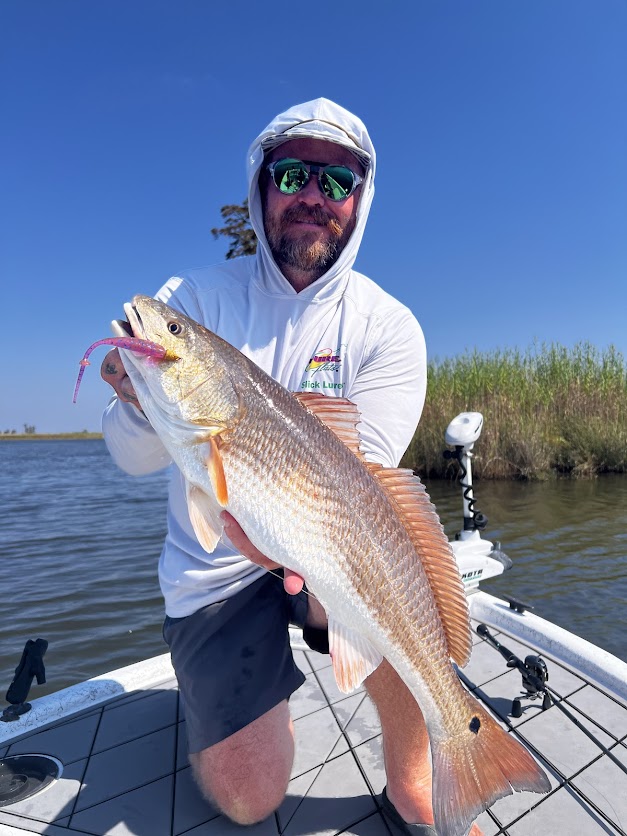
Planning Your Vacation Around Fishing
For some visitors, choosing when to visit Orange Beach has very little to do with the weather.
It’s all about what’s biting.
One of the things that makes fishing along Alabama’s Gulf Coast so special is that it never really stops. The species change, seasonal patterns evolve, and techniques adjust throughout the year, but there’s always something worth chasing.
Spring is the Gulf waking up.
As water temperatures rise, the entire food chain comes alive. Speckled trout fishing is often outstanding, redfish remain a dependable target, tripletail begin arriving, tarpon start rolling along the beaches, and anticipation builds toward the opening of Alabama’s red snapper season.
Summer delivers the fishing trip many visitors have dreamed about for years.
Offshore anglers may target red snapper, king mackerel, mahi-mahi, tuna, wahoo, grouper, and many other Gulf species depending on the season and current regulations, while inshore fishermen continue finding excellent action for trout, redfish, flounder, and a variety of other coastal species.
Fall is when many local anglers quietly circle the calendar.
As water temperatures begin cooling, baitfish migrate, predators feed aggressively, and fishing opportunities become incredibly diverse. Flounder stage for their offshore spawning migration, trout return to the beaches and grass flats, tripletail continue moving through the area, and offshore opportunities remain excellent depending on seasonal regulations.
Winter tells a different story.
Sheepshead stack up around bridges and structure, black drum become a favorite target, redfish continue feeding throughout the back bays, and speckled trout can provide exceptional action on the right days. With fewer boats on the water and a slower pace overall, many local anglers enjoy winter just as much as the busiest months of summer.
The best fishing season depends entirely on what you want to catch.
That’s why each monthly chapter in this Almanac breaks down seasonal patterns, target species, and the changes taking place beneath the surface—helping you plan your trip around the experience you’re hoping to have, not just a single species.
Captain’s Insight
Don’t plan your entire vacation around one fish.
Plan it around the experience you want to have.
Orange Beach offers outstanding fishing during every season—you’ll simply be targeting different species as nature changes throughout the year.
Best Seasons: Every Season (depending on your target species)

Chasing Warm Gulf Water and Beach Days
For many visitors, the perfect beach vacation doesn’t need a packed itinerary.
It starts with coffee on the balcony.
A short walk to the beach.
Hours spent listening to the waves.
A quick lunch.
Then right back into the Gulf until the sun begins to sink toward the horizon.
If that sounds like your idea of the perfect vacation, timing matters.
Late spring through early fall is when Orange Beach truly shines for beach lovers.
By late May, the Gulf has usually warmed enough that most visitors are comfortable swimming, and as summer settles in, the water becomes perfect for long afternoons at the beach, snorkeling, paddleboarding, and nearly every other activity on the water.
September deserves special attention.
Many first-time visitors assume beach season ends after Labor Day.
Locals know better.
The Gulf often stays wonderfully warm well into September while the beaches become noticeably less crowded. You can still enjoy many of the same experiences that make summer so popular, just with a little more room to spread out.
Even if you’re visiting during the cooler months, don’t overlook the beach altogether.
Winter walks along the shoreline, searching for shells after a cold front, watching dolphins cruise just offshore, or simply enjoying the sound of the waves without the summer crowds often become some of the most memorable moments of the trip.
Local Insight
Don’t judge your vacation by the calendar. Some of Orange Beach’s best beach days happen long after many people think summer is over.
Best Seasons: Late Spring • Summer • Early Fall
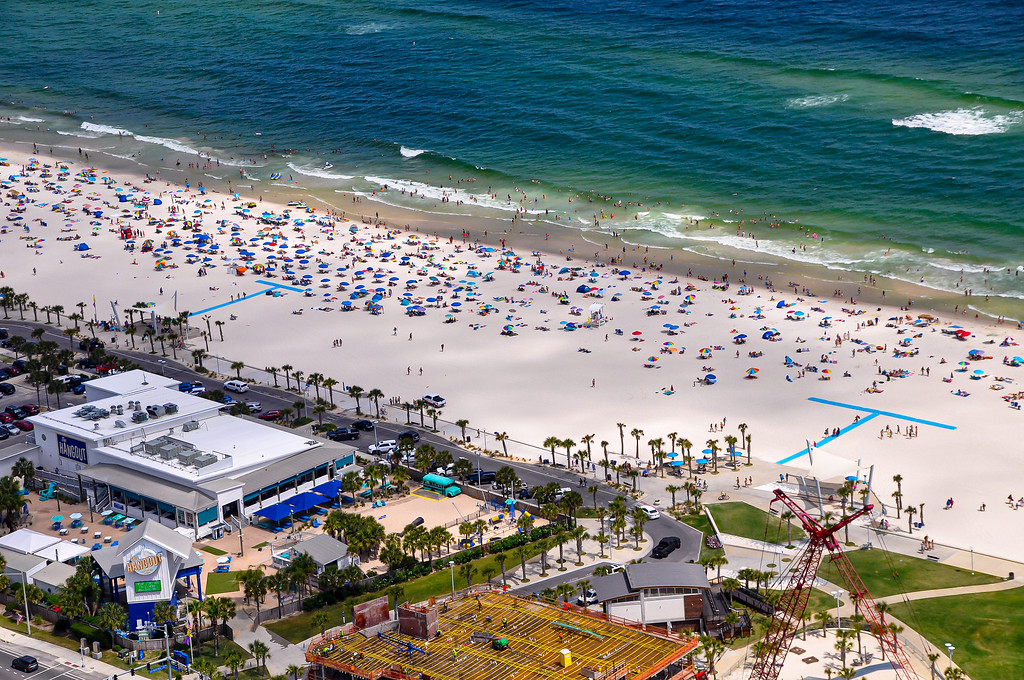
If Warm Gulf Water Is at the Top of Your List
Some vacations revolve around one simple goal.
Spend as much time in the Gulf as possible.
If you’re picturing long afternoons floating in warm water, kids playing in the waves until they’re completely worn out, snorkeling over clear water, or ending every beach day with one last swim before dinner, Gulf water temperature matters just as much as the weather.
Fortunately, Orange Beach enjoys one of the longest swimming seasons anywhere along the northern Gulf Coast.
By late May, Gulf water temperatures have usually warmed enough that most visitors are comfortable swimming. Through June, July, and August, the Gulf becomes the centerpiece of nearly every vacation, whether you’re relaxing on the beach, paddleboarding, snorkeling, fishing, or simply cooling off after a morning in the sun.
Then September quietly arrives.
School is back in session.
The holiday crowds have gone home.
But the Gulf hasn’t gotten the memo.
The water often remains comfortably warm well into September, allowing visitors to enjoy many of the same beach experiences that make summer so popular—only with lighter crowds, shorter restaurant waits, and a slower pace.
Even during the cooler months, don’t overlook the shoreline.
Some of the most memorable mornings of the year are spent walking the beach after sunrise, searching for shells after a passing cold front, or watching dolphins cruise just beyond the breakers while the rest of the beach is still waking up.
Captain’s Insight
Many visitors think beach season ends after Labor Day.
Around here, many locals would tell you it’s just entering one of its best chapters.
Best Seasons: Late Spring • Summer • Early Fall
Planning an Incredible Vacation Without Overspending
One of the biggest misconceptions about visiting Orange Beach is that you have to come during the busiest weeks of summer to have the best vacation.
In reality, some of the best values of the year can be found just outside the peak season.
Late April, early May, September, and much of October often offer an incredible combination of beautiful weather, comfortable Gulf water, outstanding fishing, and noticeably lighter crowds. Vacation rentals may offer better availability, restaurants are easier to enjoy without long waits, and many of the same activities that define summer are still in full swing.
You’re not sacrificing the experience.
You’re simply experiencing a different version of Orange Beach.
That doesn’t mean summer isn’t worth visiting.
For many families, traveling during June and July is the only option because of school schedules—and those months create unforgettable memories. The beaches are full of energy, the Gulf is at its warmest, and every attraction is operating at full speed.
The key is understanding the trade-offs.
Peak season brings the biggest selection of activities and the liveliest atmosphere.
Shoulder seasons often reward flexible travelers with a little more space, a slower pace, and outstanding overall value.
Neither choice is wrong.
The best value isn’t always the lowest price.
It’s getting the vacation you’re hoping for.
Captain’s Insight
If your travel dates are flexible, shifting your vacation by just two or three weeks can completely change your experience. You’ll often enjoy the same beautiful beaches and warm Gulf water while spending less time in traffic, waiting for a table, or searching for parking.
Best Seasons: Late April • May • September • October
Planning Your First Visit
Planning your first trip to Orange Beach can feel a little overwhelming.
Should you come during the excitement of summer?
Would September really be that much better?
Is the Gulf warm enough to swim in during May?
Will there still be plenty to do if you visit in October?
These are some of the most common questions we hear, and they’re exactly why this Almanac exists.
Unlike many beach destinations, Orange Beach doesn’t have one “perfect” season.
Instead, it offers twelve unique versions of the same place.
Summer delivers everything most families imagine when they picture a Gulf Coast vacation—warm emerald water, busy beaches, long sunny days, and nearly every attraction operating at full speed.
Spring is a season of change and anticipation. The Gulf begins warming, wildlife becomes more active, fishing improves almost weekly, and the excitement of summer quietly starts building.
Fall offers many of the same experiences people love about summer, but often with lighter crowds, shorter restaurant wait times, and a more relaxed pace that many repeat visitors come to prefer.
Winter reveals a quieter side of Orange Beach. It’s a season of peaceful beaches, spectacular sunsets, excellent inshore fishing, migrating birds, and mild afternoons that can feel like spring to visitors escaping colder climates.
There isn’t a wrong choice.
Only the choice that’s right for you.
Some visitors dream about the excitement of July, when the beaches are full of life and summer is in full swing.
Others picture a quiet September morning, coffee in hand, watching dolphins cruise just beyond the shoreline before the rest of the beach has even started its day.
Some come to catch their first red snapper.
Others simply want warm Gulf water, beautiful sunsets, and a few days where life slows down.
That’s exactly why we created this Almanac.
The chapters that follow aren’t simply weather summaries or lists of average temperatures.
They’re a month-by-month guide to how Orange Beach changes throughout the year—from weather, Gulf water temperatures, fishing, wildlife, water clarity, seasonal events, and local observations gathered from years spent on these waters.
By the time you finish reading, you won’t just know the best time to visit Orange Beach.
You’ll know which version of Orange Beach feels like your perfect vacation.
Captain’s Insight
The question I get asked most often isn’t, “What’s the best month to visit?”
It’s, “When would you come?”
My answer is always the same.
It depends on the experience you’re looking for.
That’s the question this Almanac is designed to answer.
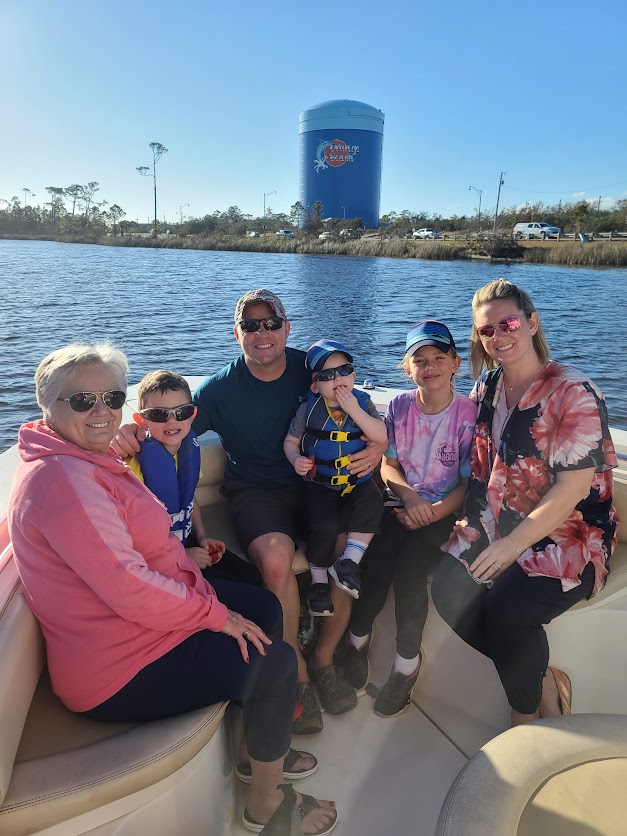
Snowbirds and Winter Escapes
Not everyone comes to Orange Beach looking for summer.
For thousands of visitors each winter, the goal is something entirely different.
Leave the snow behind.
Wake up where your morning coffee is enjoyed on the balcony instead of beside a fireplace.
Trade icy sidewalks for quiet walks along the beach.
Swap heavy coats for light jackets.
And let life slow down for a while.
Winter introduces many people to an Orange Beach they never knew existed.
The beaches become peaceful.
The traffic almost disappears.
Restaurants are easier to enjoy.
And the sunsets somehow seem even bigger when there are fewer people around to watch them.
It’s also one of the best times of year to explore beyond the beach. Visit Fort Morgan, spend an afternoon at The Wharf, explore Gulf State Park, ride the Mobile Bay Ferry to Dauphin Island, visit the Alabama Aquarium at the Dauphin Island Sea Lab, or simply enjoy fresh Gulf seafood without feeling rushed.
Many snowbirds tell a similar story.
They originally came for the weather.
They returned because Orange Beach started feeling a little like home.
Local Insight
Winter isn’t Orange Beach’s off-season.
It’s simply its quiet season.
And for many visitors, that’s exactly the appeal.
Best Seasons: Winter
Find the Right Orange Beach Boat Trip for Your Vacation
Once you have chosen the best month for your visit, experience Orange Beach from the water with Back Bay Charters. Our private trips are designed for groups of up to six guests and include dolphin cruises, sunset cruises, snorkeling adventures, and seasonal Blue Angels tours.
Explore Our Private Boat Tours
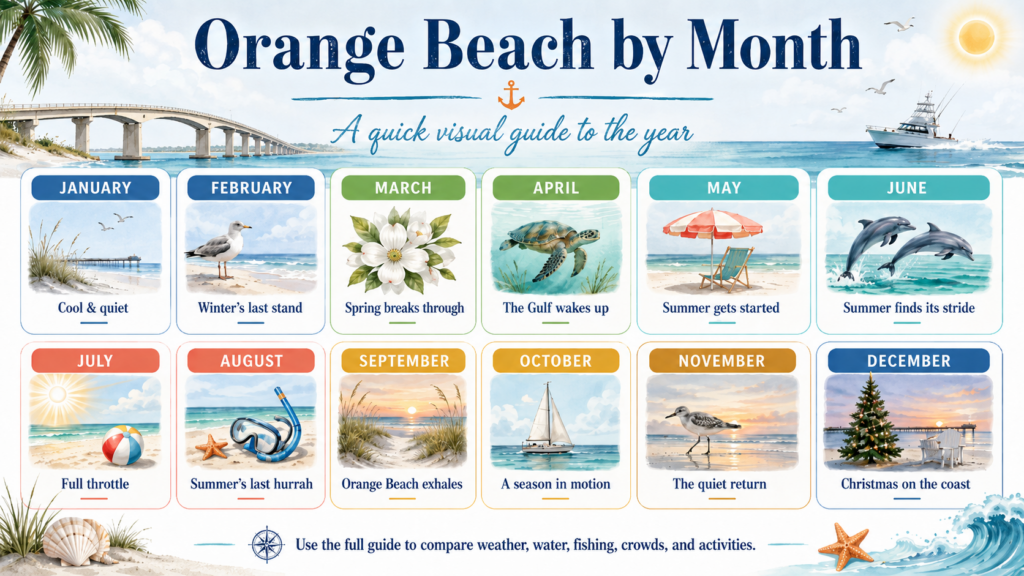
Orange Beach Year-at-a-Glance
The twelve monthly chapters tell the full story of Orange Beach, but most travelers eventually want to compare the year in one place.
This section brings the entire Almanac together.
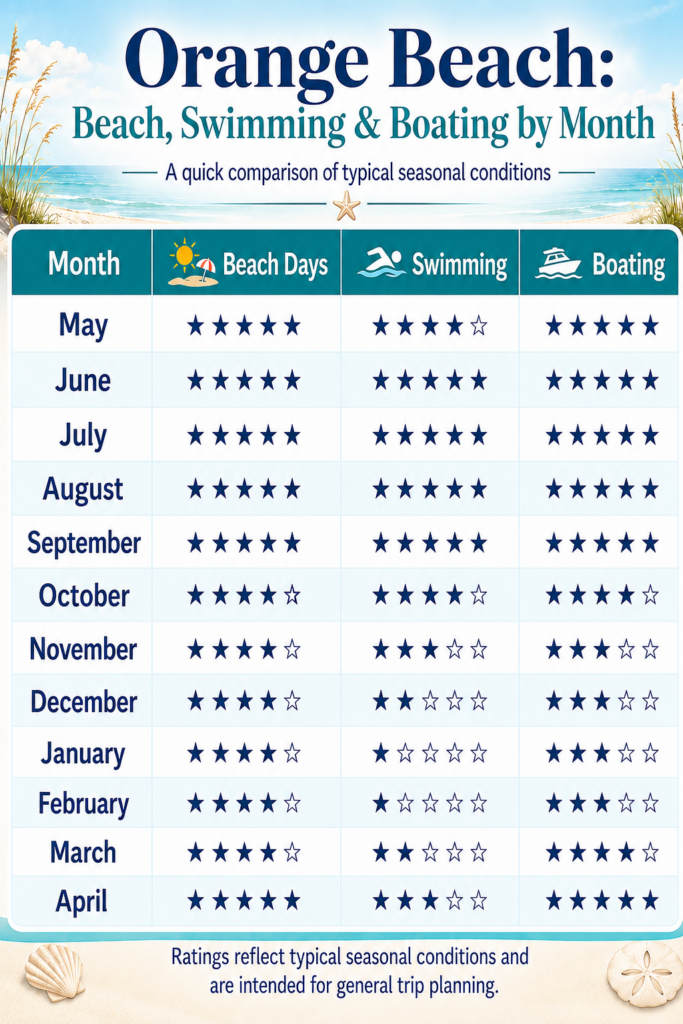
Use it to narrow down your travel dates, compare the trade-offs between seasons, and identify the version of Orange Beach that best matches the vacation you are planning.
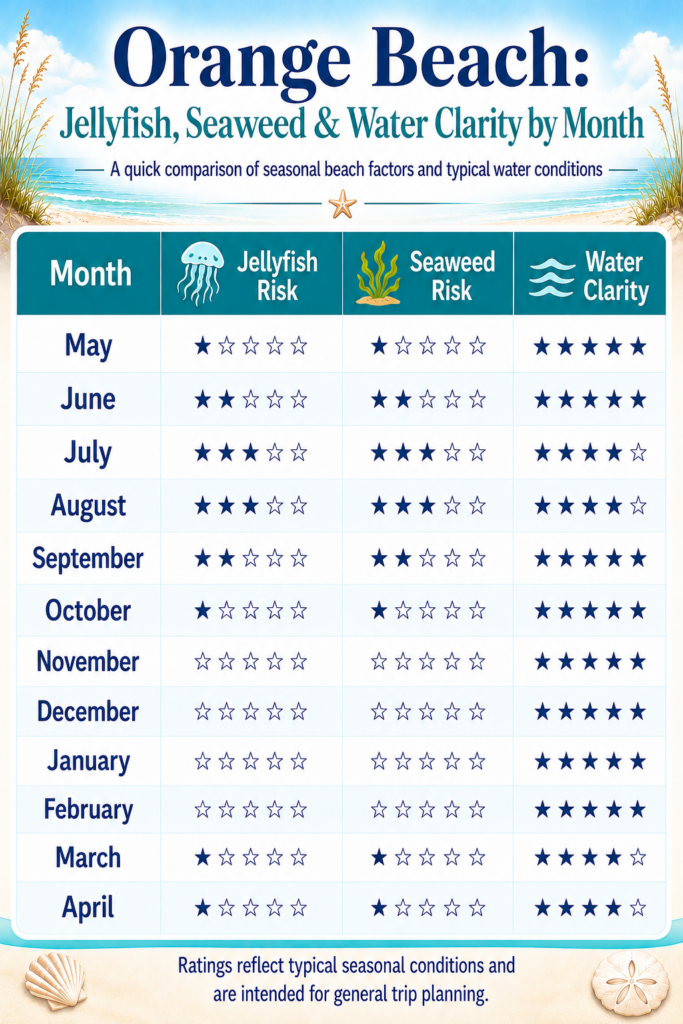
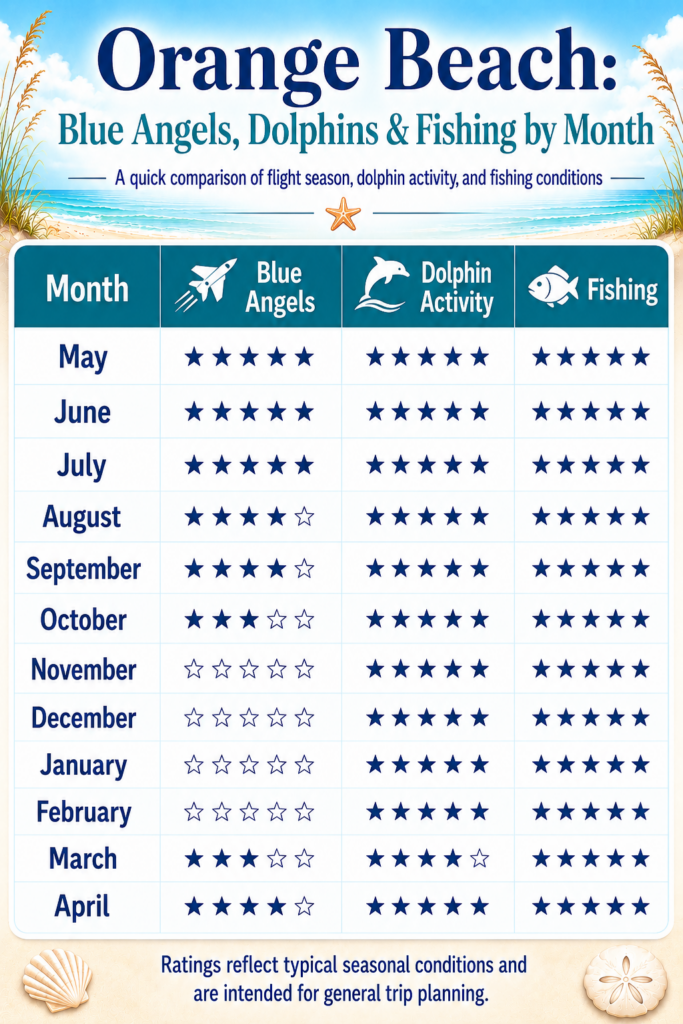
The ratings below are designed as a quick planning tool for comparing Orange Beach throughout the year. Five stars represent the strongest typical conditions for that activity, while lower ratings reflect seasonal limitations—not necessarily a bad time to visit. Weather and Gulf conditions can always vary from one week to the next.
For Jellyfish Risk and Seaweed Risk, more stars mean a greater seasonal possibility—not a better experience. Both can appear outside their typical seasons when wind and currents line up, and either can disappear just as quickly.
Weather, water clarity, fishing, wildlife, and crowd levels can vary within the same month. The goal is not to predict every day. It is to show the pattern visitors are most likely to encounter.
Beach, Swimming, and Boating
Jellyfish, seaweed, and water clarity
Blue angels, dolphins, fishing
orange beach air and gulf water temperatures by month
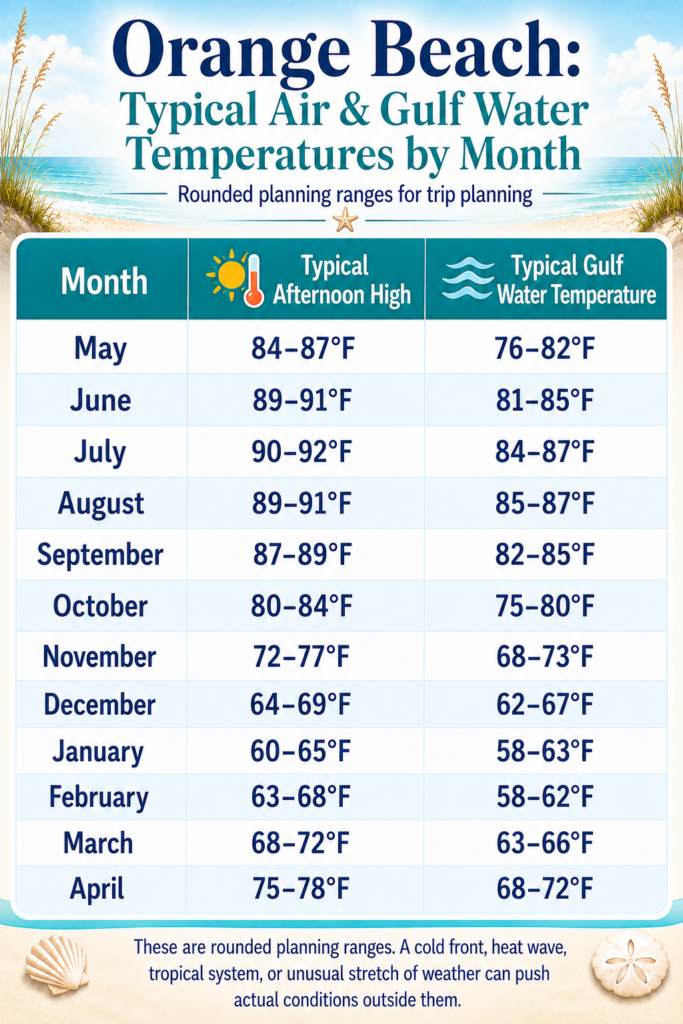
These are rounded planning ranges. A cold front, heat wave, tropical system, or unusual stretch of weather can push actual conditions outside them.
Month-by-Month Quick Comparison
Crowd levels and the overall feel of Orange Beach change noticeably throughout the year. This quick comparison shows what visitors can generally expect during each month and the experience that best defines that part of the season.
| Month | General Crowd Level | Signature Experience |
|---|---|---|
| May | Low early; busy by Memorial Day | Summer begins building almost daily |
| June | High | The classic family beach season finds its stride |
| July | Peak | Orange Beach at full throttle |
| August | High early; easing late | Summer’s final big chapter |
| September | Moderate to low | Warm water with room to breathe |
| October | Low to moderate | Comfortable fall weather and outstanding variety |
| November | Low | True Gulf Coast fall and quiet outdoor days |
| December | Low; holiday weekends vary | Christmas on the beach |
| January | Very low | Peaceful beaches and the heart of snowbird season |
| February | Very low | Winter’s last stand and trophy fishing |
| March | Moderate; varies by spring break | Spring breaks through in waves |
| April | Moderate | The Gulf wakes up and boating season returns |
Fishing Highlights by Month
Fishing around Orange Beach changes throughout the year as water temperatures, bait movement, spawning activity, and seasonal migrations shift. This quick guide highlights the pattern that best defines each month.
| Month | Signature Fishing Pattern |
|---|---|
| May | Trout, redfish, flounder, tripletail, tarpon, and expanding offshore opportunities |
| June | Red snapper season, tarpon, tripletail, mackerel, and broad summer variety |
| July | Peak summer action from the surf to deep offshore water |
| August | Warm-water fishing, late-summer bait, and strong offshore variety |
| September | Bait movement, fall feeding activity, and excellent all-around opportunity |
| October | Cooling-water transitions, trout, redfish, flounder, and productive offshore fishing |
| November | Fall feeding patterns, migrating flounder, trout, redfish, and structure fishing |
| December | Winter trout, redfish, black drum, sheepshead, and offshore tuna opportunities |
| January | Concentrated winter fish, large trout, redfish, black drum, and yellowfin tuna |
| February | Trophy speckled trout, giant yellowfin, and the beginning of the sheepshead run |
| March | Peak spawning sheepshead with a chance at a true giant |
| April | Pompano, returning flounder, trout, redfish, and the first warm-season migrants |
Find Your Best Month
There is no single winner for every traveler.
The best month depends on what you want the Gulf to feel like, how important warm water is, whether you enjoy an energetic atmosphere, and how much flexibility you have with school and work schedules.
The recommendations below are the shortest path from “When should we come?” to a realistic answer.
Best Months for a Classic Family Beach Vacation
June and July deliver the traditional summer experience most families picture: warm Gulf water, long days, fully active attractions, boating, dolphin cruises, fishing, and busy beaches filled with vacation energy.
May offers a more comfortable alternative, especially during the first half of the month. September provides warm water and many of the same experiences after the largest summer crowds have gone home.
Best overall choice: June for the full summer experience; early May or September for families with flexible schedules.
Best Months for Couples
September and October offer the best combination of warm or comfortable weather, beautiful sunsets, waterfront dining, lighter crowds, and enough activity to keep the trip interesting without making it feel rushed.
April and early May are excellent spring alternatives. December through February work especially well for couples who prefer quiet beaches, cool air, and a slower pace over swimming.
Best overall choice: September for warm water; October for comfort and calm.

Best Months for Warm Gulf Water and Swimming
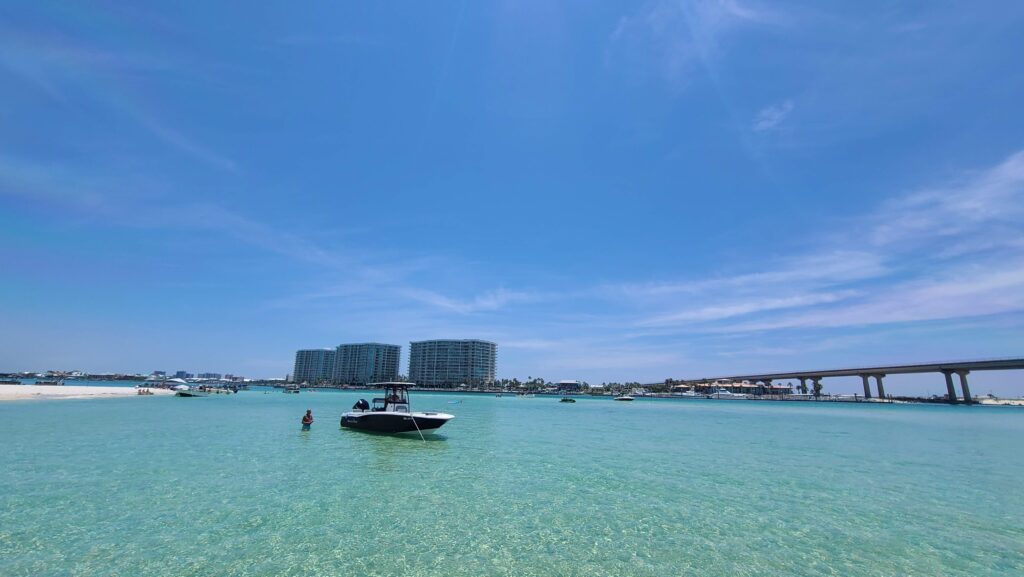
The most dependable swimming season runs from June through September.
July and August normally bring the warmest Gulf water, while June often combines warm water with slightly less intense heat. September remains one of the most overlooked swimming months because the water still feels like summer after the school-year crowds begin leaving.
Late May and early October can also be very comfortable, but individual tolerance matters more near the edges of the season.
Best overall choice: June through September.
Best Months for Fishing orange beach
The most dependable swimming season runs from June through September.
July and August normally bring the warmest Gulf water, while June often combines warm water with slightly less intense heat. September remains one of the most overlooked swimming months because the water still feels like summer after the school-year crowds begin leaving.
Late May and early October can also be very comfortable, but individual tolerance matters more near the edges of the season.
Best overall choice: June through September.
Best Months for Dolphin Cruises
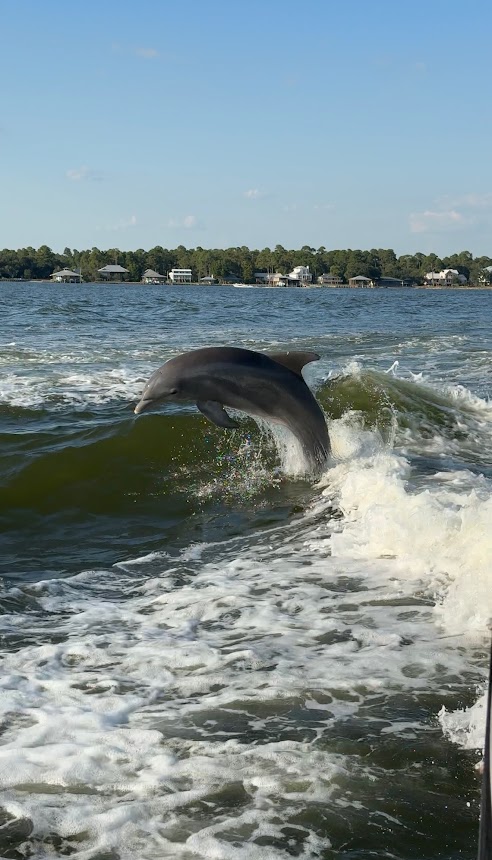
Bottlenose dolphins live around Orange Beach throughout the year.
During winter, bait often concentrates in rivers, bayous, and protected back bays. As the water warms, food spreads toward the passes, islands, beaches, and nearshore Gulf, giving captains more territory to search.
May through October offers warm weather and frequent nearshore activity. November through February provides a quieter experience with far less boat traffic and excellent opportunities in protected waters.
Best overall choice: May, June, September, and October for the strongest combination of weather and activity.
Best Months for Clear Water
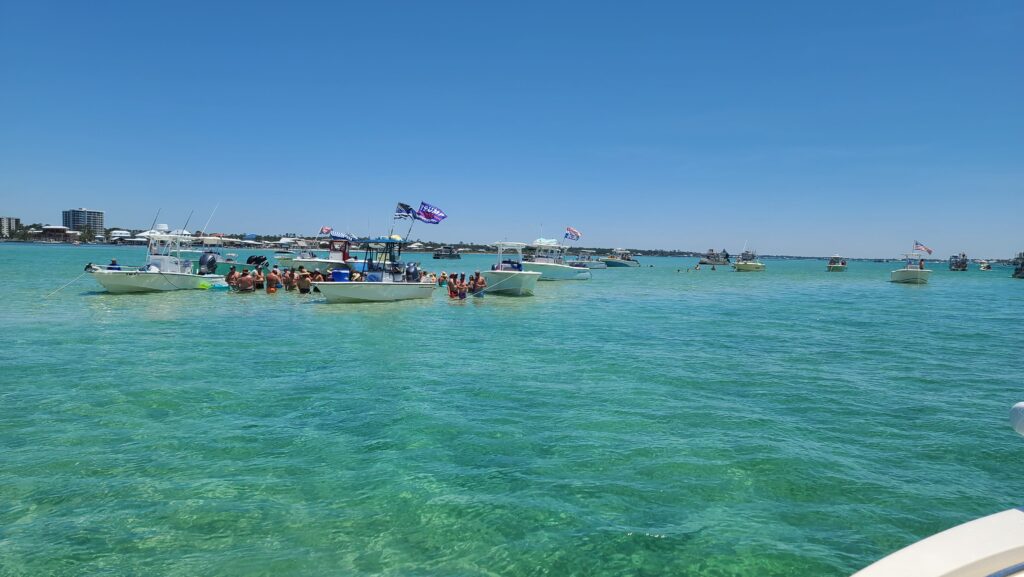
Water clarity depends on inland rainfall, river discharge, wind, waves, tides, and currents—not simply the month printed on the calendar.
The most consistently clear periods often occur from late fall through winter, when biological activity slows and calm stretches allow suspended particles to settle. May, June, and September can also produce spectacular emerald water when southeast winds, low watershed rainfall, and lighter seas line up.
No month can promise clear water every day.
Best overall choice: October through February for consistency; May, June, or September for warm-water clarity windows.
Best Months for Boating
April, May, September, and October are the sweet spots.
These months combine comfortable temperatures, long enough days, active wildlife, and a lower chance of oppressive heat. Summer offers excellent boating too, but captains and recreational boaters must plan around afternoon thunderstorms, heavier traffic, and high temperatures.
March can be beautiful but is often windier and more changeable. Winter brings outstanding calm windows, although cold fronts and cool boat rides require more flexibility.
Best overall choice: April and May in spring; September and October in fall.
Best Months for Fewer Crowds
November through February delivers the quietest version of Orange Beach.
The beaches have room to breathe, restaurant waits shrink, traffic becomes easier, and the coast settles into its winter rhythm. Visitors still enjoy fishing, wildlife, sunsets, trails, and peaceful shoreline walks, but swimming is no longer the center of the trip.
For a quieter vacation with warm water, look toward September and October or the first half of May.
Best overall choice: January and February for maximum quiet; September and October for quiet without giving up the broader vacation experience.
Best Months for Overall Value
The best value is not always the cheapest room.
It is the month that gives you the experience you want without paying for or fighting through conditions you do not need.
September and October are the strongest all-around value months because the water remains usable, most activities are available, and crowds often ease. Early May provides a similar spring window before Memorial Day. November through February delivers the lowest-pressure experience for travelers who do not need warm Gulf water.
Best overall choice: September for the broadest value; winter for peace and lower seasonal demand.
Best Months for Wildlife and Photography
April and May bring spring migration, greener marshes, expanding dolphin activity, bait returning to the beaches, and a coastline changing almost daily.
September and October offer dramatic skies, active bait, fall bird movement, warm water, and less crowded coastal scenes. Winter brings bald eagles, loons, cormorants, low humidity, clear water, and peaceful beaches.
Best overall choice: April for migration and transformation; October for comfort and variety; winter for quiet wildlife observation.
Best Month for a First Visit
For a first-time visitor who wants the classic Orange Beach experience, June is the safest choice. The Gulf is warm, the days are long, and nearly every activity is operating at full speed.
For a first-time visitor with flexible travel dates, September may be even better. The Gulf still feels like summer, but the pace becomes easier and the trip often feels more personal.
Best overall choice: Early June for the classic version; September for the local favorite.
Find the Right Orange Beach Boat Trip for Your Vacation
Once you have chosen the best month for your visit, experience Orange Beach from the water with Back Bay Charters. Our private trips are designed for groups of up to six guests and include dolphin cruises, sunset cruises, snorkeling adventures, and seasonal Blue Angels tours.
Explore Our Private Boat Tours
Orange Beach Almanac Reference Guide
The monthly chapters explain when conditions are most likely to occur. This reference guide explains why they happen and how to plan around them.
It is not meant to replace current forecasts, beach flags, fishing regulations, or instructions from local authorities. It is designed to help visitors understand the forces shaping their vacation before they arrive.
Understanding Orange Beach Weather and Gulf Conditions
Orange Beach sits where warm Gulf moisture, inland weather systems, shallow bays, barrier islands, and the open Gulf constantly interact.
That is why the weather can change quickly—and why the ordinary forecast on a phone may not tell the full story for a day on the water.
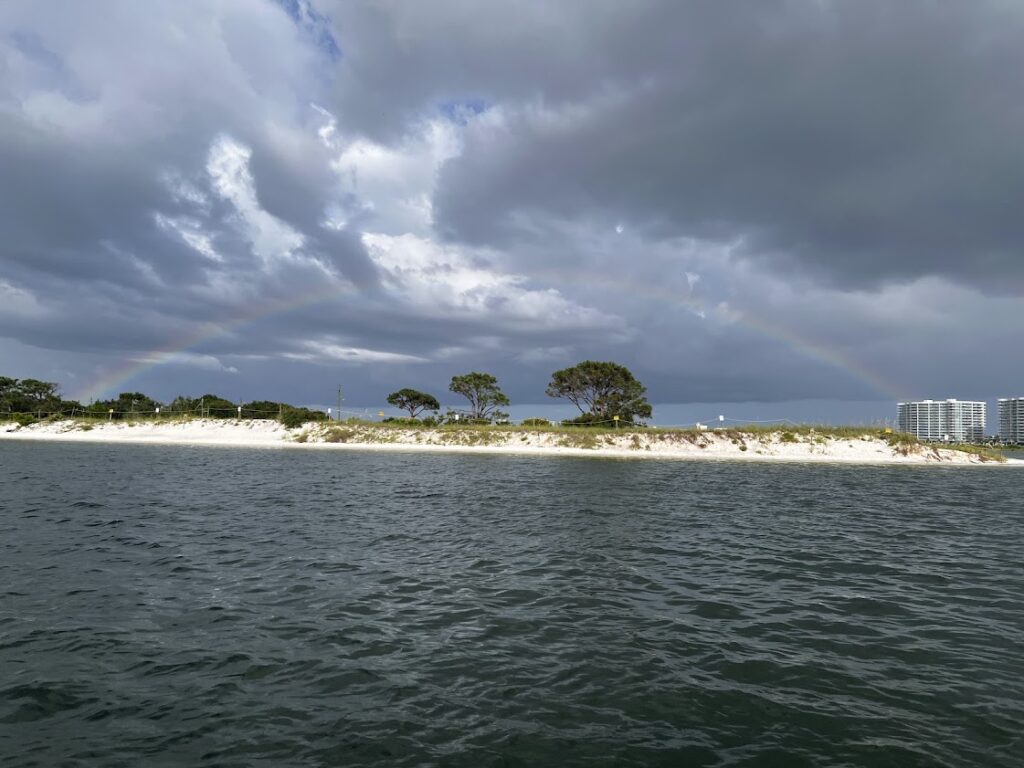
Cold Fronts
Cold fronts are most influential from fall through early spring.
Ahead of a front, warm southerly wind may increase humidity, build seas, and push water into the bays. As the front passes, thunderstorms or rain may develop before the wind turns north or northwest and cooler, drier air arrives.
The first day behind a strong front can remain windy and rough. The calmer period that follows often produces clear skies, low humidity, improved visibility, and excellent fishing or boating conditions.
Warm Fronts and Spring Changes
Spring weather can feel unsettled because warm Gulf air repeatedly pushes north while late-season cold fronts continue moving toward the coast.
March shows this conflict more clearly than any other month. A warm afternoon can feel almost like summer, followed by a cold, windy morning only a day or two later.
By April, warm stretches become more dependable, although the wind still deserves attention.
Summer Sea Breezes
The land heats faster than the Gulf during the day.
As warm air rises over land, cooler marine air moves inland to replace it, creating the afternoon sea breeze familiar to anyone who spends time on the Alabama coast.
The breeze can make the beach feel more comfortable, but it may also turn a calm morning boat ride into a choppier return trip. During otherwise stable weather, an early departure often provides the smoothest water.
Afternoon Thunderstorms
Summer thunderstorms can build quickly in warm, humid air.
Many are brief and localized, but every storm must be respected. Lightning can reach well beyond the heaviest rain, wind may increase suddenly, and visibility can fall quickly.
Boaters should never depend on being able to outrun a storm. Watch the radar, pay attention to the sky, and leave enough time to reach shelter before conditions deteriorate.
Coastal Fog
Late winter and early spring can produce enormous fog banks when warm, humid air moves across cooler bays and nearshore Gulf water.
Visibility may drop from miles to almost nothing in a short distance. Fog can linger over water after inland areas have cleared, making familiar channels, bridges, and shorelines difficult to recognize.
Slow down, use navigation lights, monitor electronics, sound appropriate signals, and avoid unnecessary travel when visibility becomes unsafe.
Tropical Weather
The Atlantic hurricane season officially includes much of the warm-weather travel calendar, but the Gulf does not produce a storm on a schedule.
Most visits are unaffected. When a tropical disturbance does develop, however, conditions can change far beyond the storm’s center. Long-period swell, rip currents, high surf, heavy rainfall, storm surge, and strong wind may reach the coast before the worst weather arrives.
Follow the National Hurricane Center, the National Weather Service, local emergency management, and instructions from lodging providers or authorities. Never make decisions based only on social-media speculation.
The Marine Forecast Matters
A land forecast may say “sunny and warm” while the open Gulf is rough.
For boating, fishing, and dolphin cruises, pay attention to wind direction, wind speed, gusts, wave height, wave period, visibility, tides, and approaching weather systems. Conditions inside a canal or protected bay can look completely different from Perdido Pass or the open Gulf.
Captain’s Insight
The question is rarely, “Will it rain?”
The better questions are: What is the wind doing? When is the front arriving? What will the pass look like? And how long is the safe weather window?
That is how captains plan the day.
Understanding Gulf Water Clarity
Orange Beach water clarity begins far beyond the beach.
The Mobile Bay drainage system covers roughly 44,000 square miles across several states. Rain falling hundreds of miles inland can eventually increase river flow, carry suspended sediment into Mobile Bay, and influence Gulf water color days or even weeks after local skies have cleared.
That is why a sunny week in Orange Beach does not always guarantee clear water—and why a brief local shower often matters less than a major inland rain event.
Inland Rainfall and River Discharge
Heavy rain across the watershed increases the volume of freshwater moving toward Mobile Bay.
That water may carry fine sediment, organic material, and darker color from rivers and wetlands. Wind, tides, and currents then determine whether the bay-influenced water remains west of Orange Beach or spreads along the beaches.
The effect is delayed. Visitors sometimes arrive after several beautiful local days and wonder why the water still looks dark. The answer may be rainfall that occurred far inland well before the vacation began.
Wind Direction
Local experience shows a useful general pattern:
- Light south or southeast winds often favor cleaner Gulf water moving toward Orange Beach.
- Southwest winds more often bring dirtier or sediment-influenced water from the west.
- Strong onshore winds from any direction can stir sand and suspended particles in shallow water, reducing visibility even when the water itself is healthy.
These are tendencies, not unbreakable rules. Wind strength, duration, river discharge, tide, current direction, and wave action all work together.
Waves and Suspended Sand
Shallow water reacts quickly to wind and waves.
A clear morning may become cloudy after several hours of rough surf because sand and fine sediment have been lifted from the bottom. Once the wind settles and wave energy decreases, those particles may fall out of suspension and visibility can improve surprisingly fast.
Cloudy water after a windy day does not automatically indicate pollution.
Tides and Perdido Pass
Perdido Pass constantly exchanges water between the bays and the Gulf.
An incoming tide may carry cleaner Gulf water toward the pass and nearby shoreline. An outgoing tide may carry darker or more sediment-influenced bay water toward the beach. At times, visitors can see two distinct water colors meeting in the same area.
Biological Activity
Water clarity is not only about dirt or sand.
Plankton, algae, baitfish, microscopic organisms, and organic material can all reduce transparency. Warmer water usually supports greater biological activity, which is essential to the coastal food web even when it makes the Gulf look less clear than it did in winter.
Cold months often produce exceptional clarity because biological activity slows and calm periods allow suspended particles to settle.
The Best Formula for Clear Water
There is no guaranteed formula, but the strongest combination is usually:
- Several days without major rainfall across the watershed
- Light winds, especially from the south or southeast
- Lower wave energy
- Favorable currents and tides
- Enough time for suspended material to settle
When those pieces align, Orange Beach can produce brilliant emerald and turquoise water in almost any season.
Captain’s Insight
Do not judge the entire vacation by the first look from the balcony.
The Gulf can change color quickly. A wind shift, tide change, or calm day may transform the same beach that looked completely different the afternoon before.
Seaweed, Jellyfish, and Other Beach Conditions
Seaweed and jellyfish are natural parts of the Gulf ecosystem.
Their presence varies from year to year, week to week, and sometimes beach to beach. Neither follows a perfect monthly schedule, although warmer months generally bring a higher chance of encountering them.
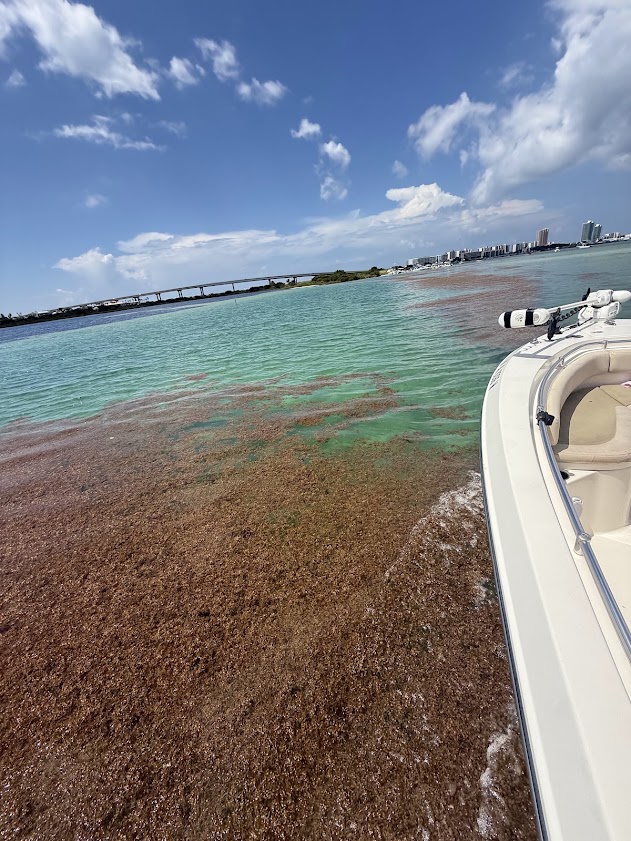
Sargassum
Sargassum is a floating brown algae that provides food and shelter for juvenile fish, crabs, shrimp, sea turtles, and other marine life while it remains offshore.
Wind and currents occasionally carry it toward Alabama beaches. Fresh floating sargassum is part of a healthy marine ecosystem. Once large amounts wash ashore and begin decomposing, it can become unpleasant and produce an odor.
Conditions can improve rapidly after a shift in wind or current.
“June Grass”
Visitors may hear the term “June grass” used for fine pieces of algae or marine vegetation suspended in the surf or collected near the shoreline.
It is different from large floating mats of sargassum, although both are often described simply as seaweed. June grass can temporarily reduce swimming comfort or visible clarity before moving away with changing conditions.
Despite the name, it is not restricted to June.
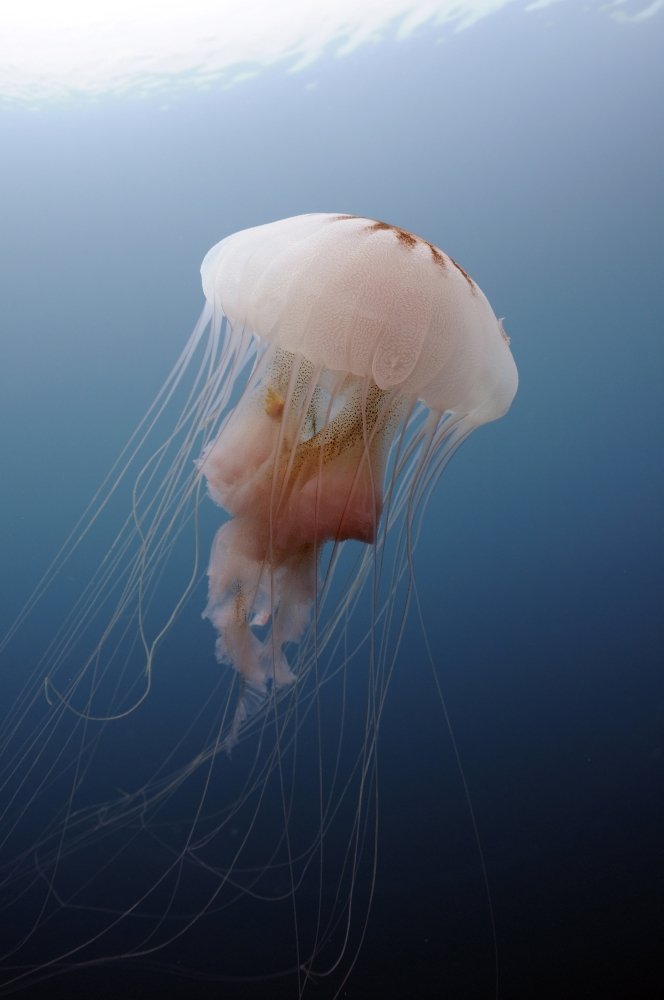
Moon Jellies and Atlantic Sea Nettles
Moon jellies and Atlantic sea nettles are among the jellyfish visitors are most likely to notice along the northern Gulf Coast.
Jellyfish often arrive in waves. One week may bring almost none, while the next brings large numbers into the same area. Water temperature, food availability, current, wind, and tides all influence where they collect.
Moon jellies generally have a milder sting than sea nettles, but individual reactions vary. Avoid touching any jellyfish, including those washed onto the beach, because tentacles may still sting.
Portuguese Man-of-War
Portuguese man-of-war are less common than ordinary jellyfish around Orange Beach, but sustained onshore or southerly winds and tropical weather can occasionally push them toward the coast.
Their blue or purple floating sail makes them recognizable, and their long tentacles can cause a painful sting. Give them a wide berth and never handle one—even if it appears stranded or dried out.
Purple Flags
A purple beach flag warns of dangerous marine life, which may include jellyfish or other hazards.
The flag does not mean every inch of beach contains the same condition. It means visitors should use caution, ask lifeguards what is present, and pay attention before entering the water.
Almanac Note
Beach conditions change quickly. Check the current flags and speak with a lifeguard rather than relying on yesterday’s report or a photograph posted from another section of beach.
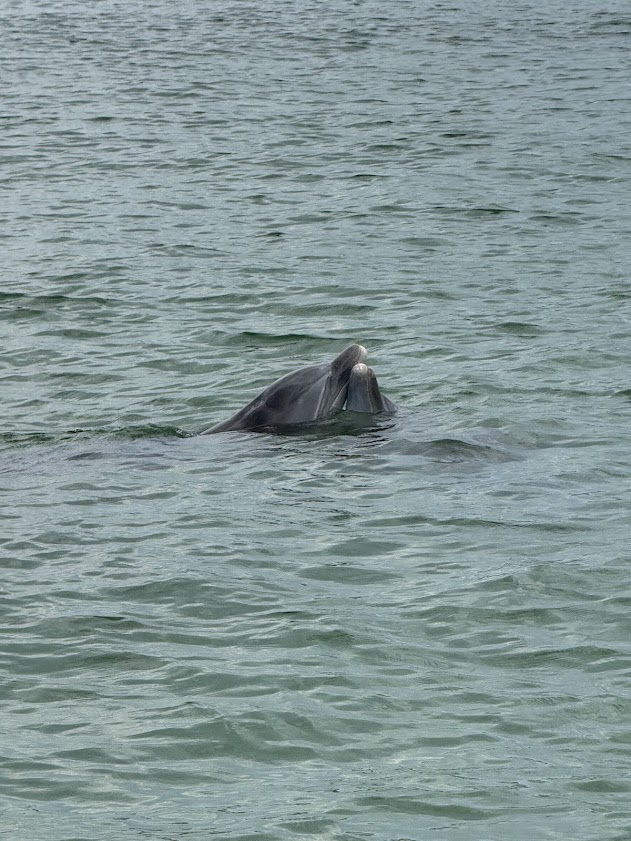
Dolphins and Coastal Wildlife
Orange Beach wildlife follows food, temperature, nesting cycles, and migration—not the tourism calendar.
Understanding those patterns makes every trip more interesting because visitors begin noticing the small clues that reveal what is happening beneath and above the water.
Bottlenose Dolphins Are Year-Round Residents
The bottlenose dolphins around Orange Beach do not leave for winter and return for summer.
They live here throughout the year, changing their location as baitfish and other prey move. During cooler months, food may concentrate in deeper rivers, bayous, and protected back bays. As the water warms, bait spreads toward the passes, islands, beaches, and nearshore Gulf.
That is why a good dolphin captain searches for birds, bait, tide movement, and feeding activity rather than following the exact same route every day.
Responsible Dolphin Viewing
Wild dolphins should remain wild.
Never feed them, attempt to touch them, chase them, surround them, or force them to change direction. Feeding teaches dolphins to approach boats and people, placing the animals at greater risk from propellers, fishing gear, intentional harm, and unhealthy food.
Observe quietly and let the dolphins control the encounter.
Winter Birds
Fall and winter bring loons, cormorants, bald eagles, and other seasonal birds into the coastal region.
Bald eagle activity becomes especially noticeable around rivers, bays, and nesting territories during the colder months. Common loons and double-crested cormorants spend winter diving for fish before many begin moving north during spring.
Spring Migration
Alabama’s barrier islands, coastal forests, marshes, and refuges provide important stopping places for birds moving north across or around the Gulf.
April is one of the most exciting periods because weather can produce sudden arrivals. A quiet patch of coastal woods may fill with songbirds after an overnight migration or approaching front.
Give resting birds room, remain on established trails, and avoid disturbing nesting areas.
Sea Turtles
Sea-turtle nesting occurs during the warm season along Alabama beaches.
Visitors should keep beaches dark at night, remove equipment and trash, fill holes, avoid disturbing marked nests, and never shine lights at nesting turtles or hatchlings. A turtle on the beach is not lost; it is completing one of the most important parts of its life cycle.
The Food Chain Along the Beach
Baitfish are one of the clearest signs of activity.
When schools gather along the shoreline, they may attract dolphins, pelicans, gulls, Spanish mackerel, jack crevalle, tarpon, sharks, and other predators. Diving birds, nervous water, splashes, and dark patches moving beneath the surface can reveal an entire food web in action.
Captain’s Insight
People ask where the wildlife is.
Most of the time, the better question is where the food is.
Find the bait, and the rest of the Gulf often tells you where to look next.

The Blue Angels: Orange Beach’s Most Exciting Neighbors
The Blue Angels are part of the identity of the western Gulf Coast. Visitors may arrive expecting beaches, dolphins, fishing, and warm Gulf water, then suddenly hear the unmistakable sound of military jets moving across the sky.
Based at Naval Air Station Pensacola, the Blue Angels train and perform only a short distance from Orange Beach. During the active season, their practices, transit flights, special events, and major air shows add an experience that few other beach destinations can offer.
Who Are the Blue Angels?
The Blue Angels are the United States Navy Flight Demonstration Squadron. Their mission is to represent the teamwork, professionalism, precision, and capabilities of the United States Navy and Marine Corps through flight demonstrations and community outreach.
The team was created in 1946 and has become one of the most recognizable aviation demonstration teams in the world.
The Blue Angels currently fly the Boeing F/A-18 Super Hornet. Their support aircraft is a Marine Corps C-130J Super Hercules known as Fat Albert, which carries personnel and equipment between show locations and may also perform during selected air shows.
Although the pilots receive most of the public attention, the Blue Angels are a complete military squadron. Maintenance technicians, crew chiefs, aviation specialists, medical personnel, logistics teams, public-affairs staff, and other Sailors and Marines work behind the scenes to keep the aircraft and demonstration operating safely.
When Does the Blue Angels Season Run?
The team normally spends January through part of March conducting intensive winter training at Naval Air Facility El Centro, California.
After winter training, the Blue Angels return to Pensacola and begin the public demonstration season. Pensacola-area practices are generally concentrated from late March or early April through October, although the exact days change every year.
The national air-show season normally continues into November, ending with the Blue Angels Homecoming Air Show at NAS Pensacola.
For Orange Beach visitors, the most active period is generally:
- Late March and April: The team returns and begins Pensacola practices.
- May through June: Regular practice activity and a busy touring schedule.
- July: The major Pensacola Beach Air Show period.
- August through September: Practices continue between national show weekends.
- October: The final portion of the regular Pensacola practice season.
- November: The NAS Pensacola Homecoming Air Show closes the touring season.
- December through February: Public Pensacola activity is limited while the team transitions into winter training.
Schedules can change because of weather, maintenance, military requirements, travel, or operational concerns. Visitors should always check the current official schedule rather than assuming the team will fly on a particular day.
What Happens During a Blue Angels Practice?
Public practices at NAS Pensacola are held on selected days rather than every weekday. They commonly begin around midmorning and last approximately 45 minutes, although timing and duration can change.
A practice allows the pilots to rehearse the same formations, passes, rolls, climbs, crossings, and precision maneuvers used during air shows. Practices may not include every element of a complete demonstration, but they can still provide an outstanding view of the team.
The National Naval Aviation Museum provides an official practice-viewing area on selected dates. After certain Wednesday practices, team members may visit the museum for an autograph session and to meet spectators.
Practices are free to watch, but visitors entering NAS Pensacola must follow the base’s current identification, access, parking, and security requirements.
What Happens During a Full Blue Angels Demonstration?
A complete demonstration normally combines several different styles of flying.
The four-jet Diamond Formation demonstrates extremely close formation flying. The aircraft move together through rolls, loops, turns, and formation changes while appearing almost connected in the sky.
The Lead Solo and Opposing Solo demonstrate the speed, maneuverability, acceleration, and crossing precision of the Super Hornet. Their passes often arrive from opposite directions and can surprise spectators who are watching the Diamond.
Near the end of the performance, all six demonstration jets join in the famous Delta Formation.
Depending on the event and schedule, Fat Albert may open the demonstration with passes that show the performance capabilities of the C-130J Super Hercules.
How Close and How Fast Do They Fly?
During their tightest formation flying, the Diamond aircraft can be separated by as little as approximately 18 inches.
The fastest passes approach 700 miles per hour, just below the speed of sound. The slowest demonstration maneuvers may be flown at approximately 120 miles per hour.
Demonstration altitude varies with the maneuver and weather conditions. Certain low-level passes may be performed at approximately 50 feet, while vertical maneuvers can climb toward 15,000 feet.
Those extremes are part of what makes a Blue Angels performance feel so different from simply watching military aircraft fly overhead. The demonstration moves from quiet, distant formations to sudden high-speed passes that can be seen, heard, and physically felt.
High, Low, and Flat Shows
The Blue Angels prepare different versions of their demonstration based on cloud height, visibility, weather, and safety requirements.
A high show allows the team to perform the full range of vertical loops, climbs, rolls, and overhead maneuvers.
A low show uses fewer high-altitude maneuvers when the cloud ceiling does not allow the complete vertical demonstration.
A flat show keeps most of the performance closer to the horizon when weather conditions prevent the high and low versions.
This means the demonstration can look different from one day to the next even when the team is flying at the same location.
Major Blue Angels Events Near Orange Beach
Pensacola Beach Air Show
The Pensacola Beach Air Show is normally held during July and is one of the biggest aviation events on the Gulf Coast.
The week often includes arrival activity, survey flights, practice passes, a dress rehearsal, and the official weekend air show. Pensacola Beach becomes extremely busy, and boat traffic throughout the surrounding waters increases significantly.
The Blue Angels perform over the Gulf, creating one of the most dramatic combinations of aviation and coastal scenery anywhere in the country.
NAS Pensacola Homecoming Air Show
The Homecoming Air Show is generally held in November at NAS Pensacola. It marks the end of the Blue Angels’ touring season and is especially meaningful because Pensacola is the team’s home base.
The event normally includes additional military and civilian aviation demonstrations before the Blue Angels close the show.
Watching the Blue Angels From the Water
Watching from the water on a Private Blues Angels Tour can provide an incredible perspective, especially during Pensacola Beach air-show activities and selected practice days.
A boat may offer:
- A wide, unobstructed view of the sky
- Relief from crowded beach parking
- Room to reposition when lawful and practical
- A memorable combination of boating and military aviation
However, viewing areas, security zones, temporary restrictions, air-show boxes, and marine exclusion areas must always be respected. Captains must also account for weather, waves, boat traffic, passenger comfort, and changing law-enforcement instructions.
No viewing location can guarantee that every maneuver will pass directly overhead. Flight paths can change based on safety, weather, air traffic, and the specific practice or demonstration being flown.
Blue Angels Planning Tips
- Confirm the official schedule shortly before the trip.
- Treat all published practice times as subject to change.
- Arrive early for museum practice viewing because parking can fill.
- Bring hearing protection for young children or noise-sensitive guests.
- Expect heavy road and boat traffic during major July and November events.
- Carry water, sunscreen, hats, and weather protection.
- Never enter restricted water or attempt to move closer after authorities establish an exclusion zone.
- Remember that a practice is not always identical to a complete air-show demonstration.
Why the Blue Angels Matter to Orange Beach
The Blue Angels are based in Pensacola, but their presence is felt throughout Orange Beach, Perdido Key, and the surrounding coastal waters.
They add another layer to the personality of the region. A normal beach or boating day can suddenly include six Super Hornets crossing the coastline, a distant smoke trail appearing over the Gulf, or the sound of a solo jet arriving before anyone sees it.
For visitors, that can become one of the most memorable moments of the entire vacation.
Orange Beach already offers beaches, boating, dolphins, fishing, sunsets, and wildlife. The Blue Angels add something few destinations can match: world-class military aviation unfolding above the Gulf Coast.
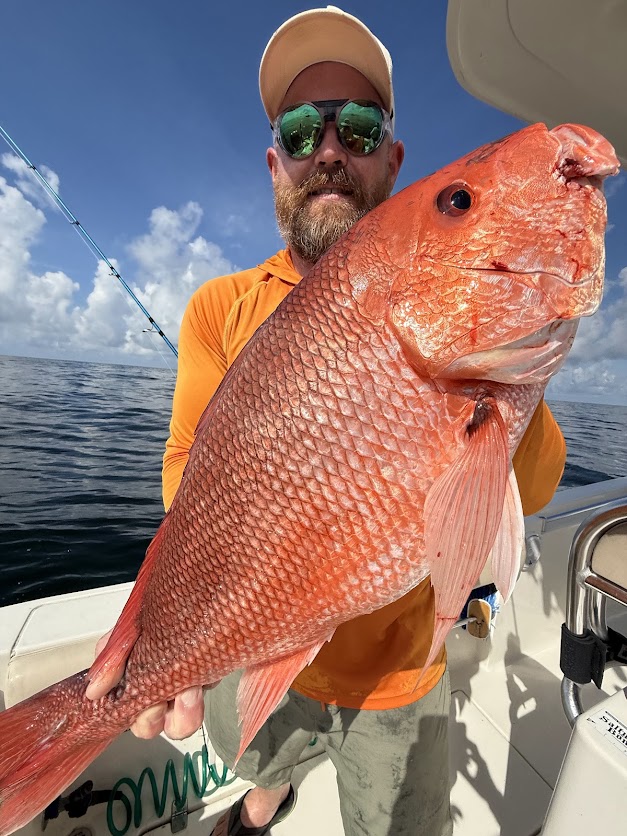
Orange Beach Fishing Calendar
This calendar describes broad seasonal patterns around Orange Beach. It does not represent guaranteed availability, an open harvest season, or current bag and size limits.
Fish move according to temperature, bait, salinity, weather, spawning cycles, and local conditions. Offshore seasons and regulations may change from year to year.
| Month | Inshore and Surf | Nearshore and Offshore |
|---|---|---|
| January | Winter speckled trout, redfish, black drum, whiting | Sheepshead building around structure; yellowfin tuna offshore |
| February | Trophy trout, redfish, black drum, occasional whiting | Sheepshead transition begins; giant yellowfin opportunities |
| March | Trout and redfish respond to warming spells | Peak spawning sheepshead; yellowfin tuna remains strong |
| April | Pompano, trout, redfish, returning flounder | Final sheepshead concentrations; first Spanish mackerel and possible cobia |
| May | Trout on flats, redfish, flounder, pompano | Tripletail, tarpon, mackerel, cobia, and expanding reef opportunities |
| June | Trout, redfish, flounder, beach predators | Red snapper season patterns, tripletail, tarpon, kings, and offshore variety |
| July | Summer inshore patterns and active surf food chain | Peak warm-water variety from reefs to blue water |
| August | Early-morning trout and redfish; warm-water surf action | Strong offshore variety, bait concentrations, and late-summer migrators |
| September | Bait movement, trout, redfish, flounder, surf action | Excellent all-around fishing as fall transition begins |
| October | Cooling-water trout, redfish, flounder, pompano possibilities | Productive reef and offshore fishing when weather allows |
| November | Trout, redfish, black drum, flounder migration | Sheepshead return to structure; offshore opportunities remain weather-dependent |
| December | Winter trout, redfish, black drum, sheepshead | Yellowfin tuna and other offshore opportunities during safe weather windows |
Inshore Planning
Water temperature and recent weather are often more useful than the calendar.
A strong winter front may push trout deeper. Several warm spring afternoons may move them shallow. Summer fish often feed best early before heat and boat traffic increase. Fall cooling can trigger aggressive feeding as bait moves through the system.
Surf Planning
Pompano, whiting, redfish, black drum, trout, flounder, Spanish mackerel, and other species may use the surf at different times.
Look for troughs, cuts through sandbars, points, current seams, bait, and changes in wave action. The farthest cast is not always the best cast; fish often travel through the first trough close to shore.
Offshore Planning
Weather and regulations control offshore planning as much as fish movement.
A target may be abundant but closed to harvest. A season may be open while seas are unsafe. The best plan is to select a general experience—reef fishing, trolling, tuna fishing, deep dropping, or nearshore action—and let current regulations and conditions determine the final target.
Almanac Note
Fishing seasons, bag limits, size limits, licenses, permits, and federal requirements can change. Always review the latest Alabama and federal regulations before targeting or harvesting any species.
Beach Flags and Rip Currents
A beautiful beach day is not automatically a safe swimming day.
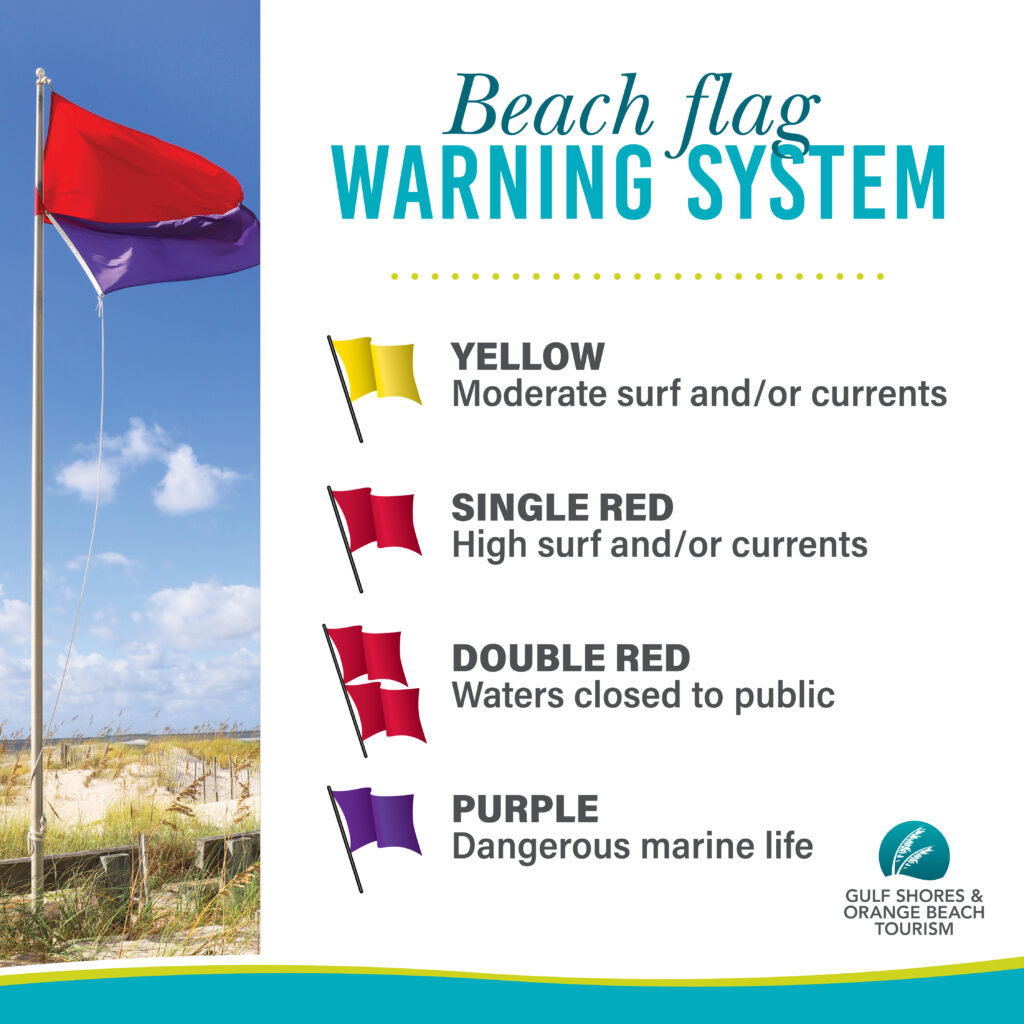
Rip currents can form under blue skies and may be difficult to recognize from the shoreline. Check the beach flags every day, follow lifeguard instructions, and remember that conditions can change after you arrive.
Beach Flag Meanings
What Is a Rip Current?
A rip current is a concentrated flow of water moving away from shore through the surf zone.
It does not pull a swimmer beneath the surface. The danger comes from carrying the swimmer away from the beach and causing panic or exhaustion when the person tries to fight directly against the current.
Rip currents may form near breaks in sandbars, jetties, piers, structures, or areas where water is returning offshore.
If You Are Caught in a Rip Current
- Stay calm and conserve energy.
- Do not try to overpower the current by swimming straight toward shore.
- Swim parallel to the shoreline when possible until you are outside the narrow flow.
- Then swim at an angle back toward the beach.
- If you cannot escape, float or tread water and signal for help.
If Someone Else Is in Trouble
Call for a lifeguard or emergency assistance.
Do not enter the water without training or flotation, because would-be rescuers can become victims too. Throw a flotation device if one is available and direct the swimmer to move parallel to shore.
The Safest Habits
- Swim near a lifeguard.
- Never swim alone.
- Keep children within arm’s reach near the water.
- Know your limits.
- Avoid swimming near piers, jetties, and passes where currents may be stronger.
- Leave the water when thunder is heard or lightning threatens.
- Check the current beach forecast and flags before entering.
Almanac Note
When double red flags are flying, the Gulf is closed to public entry. Treat the closure as a safety order—not a suggestion.
Planning Around Gulf Coast Conditions
A good Orange Beach vacation plan leaves room for the coast to change.
The strongest itineraries are not packed so tightly that one windy morning or passing storm ruins the entire trip. They include a few priorities, a few flexible days, and enough local understanding to move activities when conditions improve.
Build Flexibility Around Water Activities
Schedule the experiences that depend most on conditions—boating, fishing, snorkeling, and dolphin cruises—early enough in the trip that there is room to reschedule if necessary.
Do not save the one activity everyone cares about for the final afternoon.
Use the Right Forecast
The ordinary weather forecast is useful for temperature and rain chances.
For the water, also review the marine forecast, beach forecast, rip-current risk, wind direction, wave height, tides, and visibility. A sunny icon alone does not describe the Gulf.
Plan Summer Days Early
Summer mornings are often cooler, smoother, and easier for fishing, wildlife viewing, trails, and boating.
Afternoons are better suited to the beach, pool, shaded attractions, rest, or flexible plans that can pause during a thunderstorm.
Pack Layers Outside Summer
Fall, winter, and spring temperatures can change quickly.
A light jacket that feels unnecessary at the marina may become essential once the boat begins moving across open water. Layers are easier to remove than cold air is to ignore.
Respect the Heat
During summer, use sunscreen, drink water, take shade breaks, and avoid assuming that a breeze eliminates heat stress.
Children, older adults, and people unaccustomed to Gulf Coast humidity may need more recovery time than expected.
Keep Wildlife Encounters Wild
Never build the success of a trip around forcing an animal encounter.
A dolphin cruise, fishing trip, or wildlife walk should follow natural behavior rather than chase it. The best experiences happen when visitors slow down enough to notice what the coast is already doing.
Let the Month Guide the Trip
Do not plan a January vacation as though it were July.
Winter rewards fishing, wildlife, trails, restaurants, and peaceful beaches. Summer rewards early starts, warm water, long beach days, and life built around the Gulf. Spring and fall provide the best balance for travelers who want variety without the full intensity of peak season.
Captain’s Insight
The Gulf does not care what you scheduled three months ago.
Watch the conditions, stay flexible, and take the best day the water gives you. That simple approach can turn a disrupted plan into the highlight of the entire vacation.
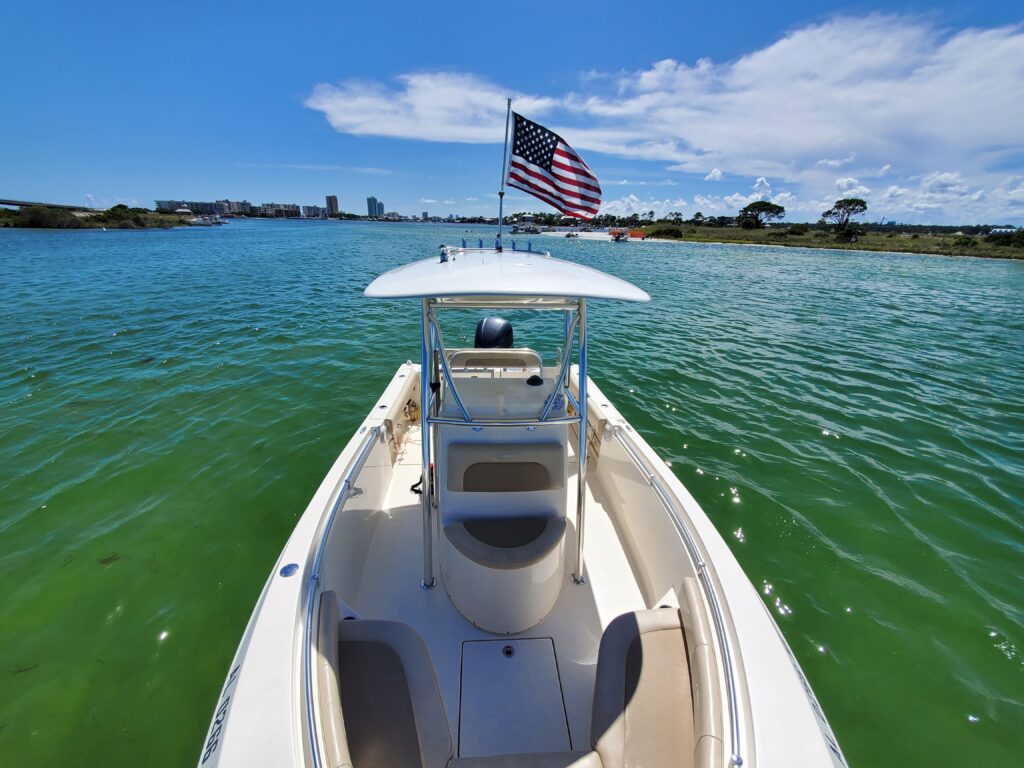
Captain’s Year-Round Picks
The comparison charts can identify the strongest months on paper.
These are my personal picks after years of watching Orange Beach change from the deck of a boat.
They are not meant to declare winners and losers. They are the months I would choose for specific experiences—and the reasons I would choose them.
My Favorite Month Overall: September
September is the month I recommend more than any other.
The Gulf still feels like summer, but Orange Beach begins to exhale after Labor Day. The beaches have more room, restaurant waits become easier, fishing remains excellent, dolphins and bait are active, and nearly every warm-weather experience is still available.
There is enough energy to feel like a beach vacation and enough breathing room to enjoy it.
Most Underrated Month: April
April may be the best month visitors overlook.
The Gulf wakes up, true boating season begins, migratory birds pass through the coast, bait appears throughout the bays and beaches, and fishing opportunities expand almost daily. The afternoons are warm without midsummer heat, and the largest crowds have not yet arrived.
It feels like the entire coast belongs to spring.
Best Month for a Classic Family Vacation: June
June is the Orange Beach summer most families have imagined all year.
The Gulf is warm, school is out, the days are long, and nearly every attraction and water activity is operating at full speed. It is busy, but the energy feels natural because everyone is here for the same reason: to spend as much time together near the water as possible.
Best Month for Couples: October
October combines comfort, beauty, and space.
The heat eases, humidity drops, the beaches become quieter, and the Gulf may still be warm enough for swimming during favorable stretches. Waterfront dining, sunset cruises, fishing, trails, and long beach walks all become easier to enjoy without the pressure of peak season.
Best Fishing Event: March
No month has a more recognizable single fishing event than the March sheepshead run.
When large spawning fish gather around nearshore structure, the action can become almost nonstop. It is fun for experienced anglers, approachable for families when seas are calm, and capable of producing a genuine trophy over ten pounds.
March weather may make you wait.
The fishing makes the wait worthwhile.
Best Month for Fishing Variety: May
May gives anglers the feeling that almost anything could happen.
Trout feed on shallow flats, redfish remain dependable, large flounder return, pompano move through the surf, tripletail begin appearing, tarpon start rolling along the beaches, and offshore anticipation builds toward summer seasons.
Every week adds another possibility.
Best Month for Boating: April
April is when boating becomes comfortable enough to shape the entire day.
The sun is warm, humidity remains manageable, the evenings are longer, dolphins begin using more nearshore water, and summer boat traffic has not reached its peak. Wind can still interrupt plans, but the right April window is hard to beat.
Best Overall Value: September
September is not always the least expensive month.
It is the month most likely to deliver a summer-quality experience without requiring visitors to accept the full summer crowd level. Warm water, active fishing, boating, dolphins, and lighter post–Labor Day traffic create one of the strongest returns on vacation time anywhere in the year.
Best Quiet Escape: January
January shows visitors an Orange Beach many summer travelers never see.
The beaches are nearly empty, the air is crisp, water clarity can be excellent, winter wildlife is active, and restaurants and roads become easy to enjoy. It is not a swimming vacation, but it may be the best month for anyone who wants the Gulf Coast to slow down with them.
Best First Visit: Early June
Early June offers the clearest introduction to what makes Orange Beach famous.
The Gulf is warm, summer is established, the days are long, and nearly every major experience is available. It carries the excitement of summer before July reaches full throttle.
Travelers with flexible schedules should also give September serious consideration.
Most Unpredictable Month: March
March can begin in fog, warm into a beautiful afternoon, and finish with a cold north wind.
Spring-break traffic arrives in waves, dogwoods bloom, sheepshead gather nearshore, and the Blue Angels begin returning—but winter still fights for control.
That unpredictability is exactly what gives March its personality.
The Month I Look Forward to Most: May
May feels like possibility.
The bait returns. The fish begin moving. Dolphins follow the food. Boats leave the marinas earlier, beaches become livelier, and Memorial Day waits at the end of the month like the starting gun for summer.
You are not arriving after everything has begun.
You are watching it happen.
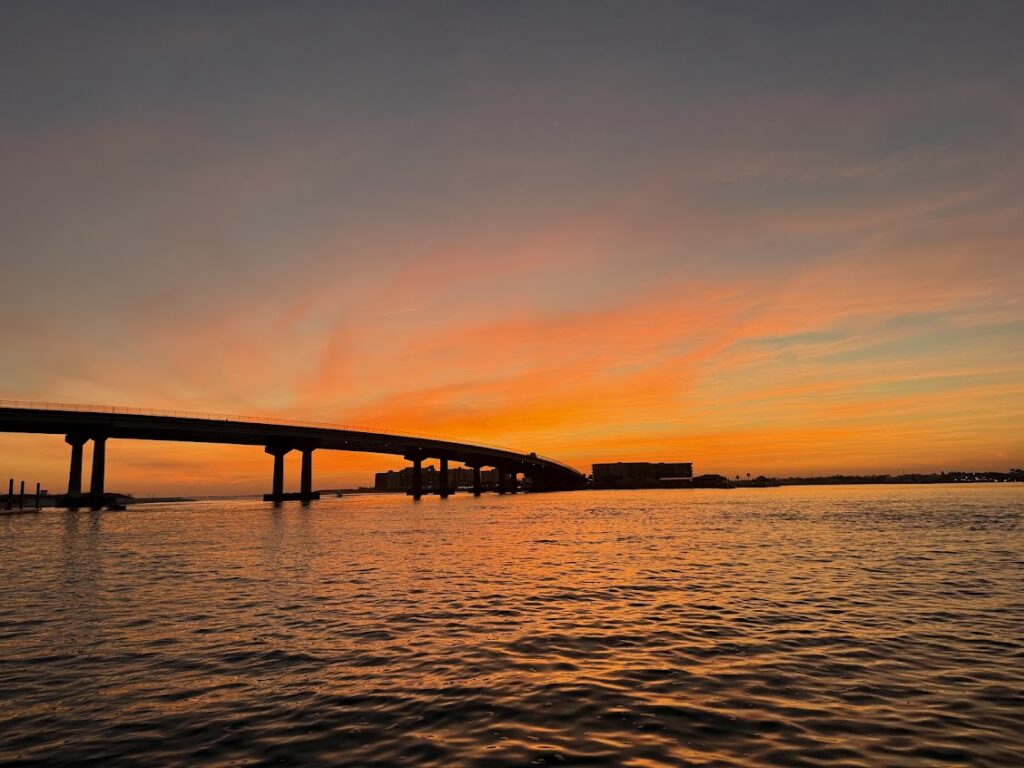
Plan an Orange Beach Experience on the Water
After choosing the season or month that fits your trip, explore a private dolphin cruise, sunset dolphin cruise, snorkeling trip, or Blue Angels boat tour. You can also view every private Orange Beach boat tour offered by Back Bay Charters.
Final Captain’s Note
The first question people usually ask is simple:
“When is the best time to visit Orange Beach?”
After an entire year on these pages, the answer should be clear.
There is not one perfect month.
There are twelve different versions of Orange Beach.
The coast changes constantly. Some changes happen gradually as the water warms or cools. Others happen in a single afternoon when the wind shifts, a cold front passes, a fog bank rolls across the bay, or a school of bait suddenly appears along the beach.
That movement is what makes this place special.
May begins with possibility and ends with summer standing at the door. June finds its rhythm. July reaches full throttle. August holds onto every last piece of the season before September gives the coast room to breathe again.
October moves between seasons. November lets fall settle in. December brings Christmas to the beach. January shows winter’s face, February makes its last stand, and March begins the long argument between cold air and spring.
Then April arrives.
The Gulf wakes up.
The circle begins again.
I have spent enough time on these waters to know that no two years unfold exactly the same way.
A fish may arrive earlier than expected. A migration may run late. A week of southeast wind may turn the Gulf brilliant emerald green. Heavy rain hundreds of miles inland may send darker water toward the beach even while Orange Beach sits beneath a perfect blue sky.
A winter morning may produce one of the clearest days of the year. A summer afternoon may begin with sunshine and end with a thunderstorm building over the mainland. A dolphin trip may find the first pod within minutes, or the search may stretch through rivers, bays, islands, and the nearshore Gulf before the animals finally reveal themselves.
That uncertainty is not a failure of the coast.
It is the coast.
The Gulf is not an attraction operating on a fixed schedule. It is a living system shaped by weather, water, food, tides, migration, and seasons. The more visitors understand that, the more rewarding the experience becomes.
A great vacation does not require perfect conditions every day.
It requires knowing what kind of day the coast is offering—and being willing to enjoy it.
When the Gulf is calm and clear, get on the water.
When the wind is blowing, explore the trails, visit a museum, enjoy a long lunch, or walk a protected stretch of beach. When summer heat settles in, start early and rest during the hottest part of the afternoon. When a winter front arrives, put on another layer and watch the entire shoreline change beneath a deep blue sky.
Pay attention to the bait.
The dolphins do.
Pay attention to the birds.
They often reveal what is happening below the surface before anyone else notices.
Pay attention to the wind.
It influences the ride, the waves, the water color, and sometimes the entire plan for the day.
Most of all, leave enough room in the schedule to be surprised.
Some of the memories people carry home were never part of the itinerary.
It may be a child seeing a dolphin in the wild for the first time. A giant school of jack crevalle exploding along the beach. A bald eagle watching the bay from a pine tree. A fog bank swallowing Perdido Pass. A sunset that turns every cloud red and gold. A trophy fish rising beside the boat after a long fight.
Or it may be something much quieter.
Coffee on a balcony before the beach wakes up.
A long walk with almost no one else around.
The sound of the Gulf after dark.
A family staying on the water a little longer because nobody is ready for the day to end.
Those moments happen in every season.
They simply look different from month to month.
That is why the best time to visit Orange Beach is not a universal date on the calendar.
It is the moment when this coast matches the experience you have been hoping to find.
For one family, that will always be July.
For another, it will be the first quiet week after Labor Day.
An angler may wait all year for spawning sheepshead in March. A couple may return every October for cooler evenings and uncrowded sunsets. A snowbird may arrive in December and stay until the dogwoods begin blooming.
None of them are wrong.
They have simply found their version of Orange Beach.
I hope this Almanac helps you find yours.
About the Local Captain
Matt Swiggum is the owner and captain of Back Bay Charters in Orange Beach, Alabama. These guides combine verified public information with observations gathered from years spent boating, fishing, and helping families experience the bays, beaches, passes, dolphins, wildlife, and seasonal changes of Alabama’s Gulf Coast.
Ready to Experience Orange Beach From the Water?
Skip the crowded tour boats and enjoy a private trip built around your group. Back Bay Charters offers flexible two-hour experiences with more room to explore the bays, coastline, wildlife, and seasonal highlights of Orange Beach.
Check Availability and Book Your Trip
Continue Exploring the Monthly Guides
Links to more Articles: