
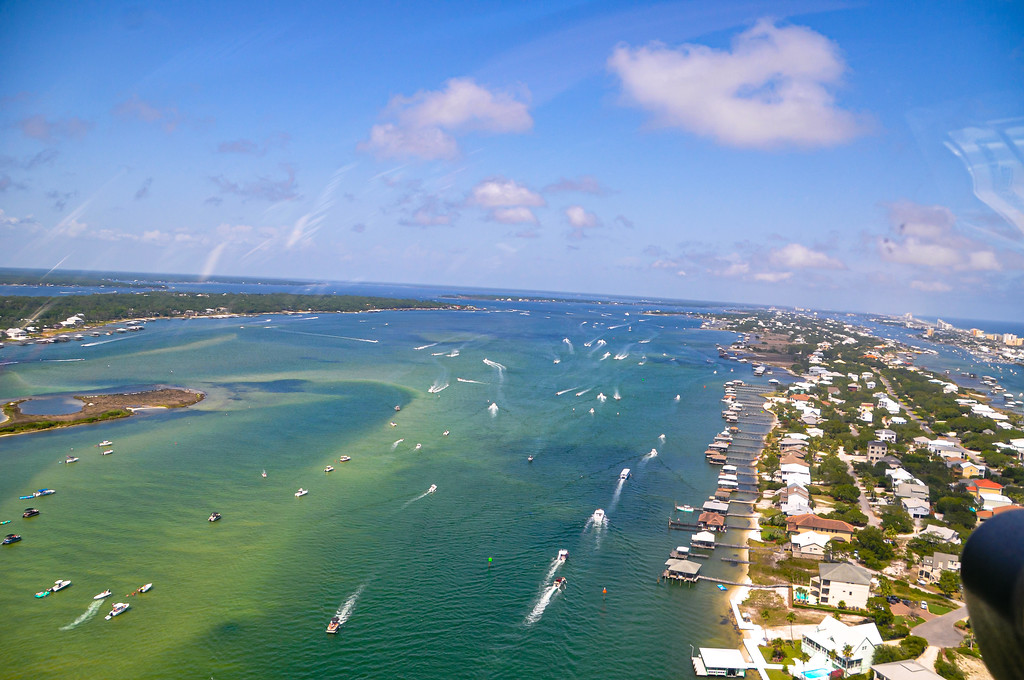
March in Orange Beach
Spring Breaks Through
Explore the Orange Beach Almanac
Links to more Articles:
| Full-Year Guide | Previous Month | Next Month |
|---|---|---|
| Best Time to Visit Orange Beach | February in Orange Beach | April in Orange Beach |
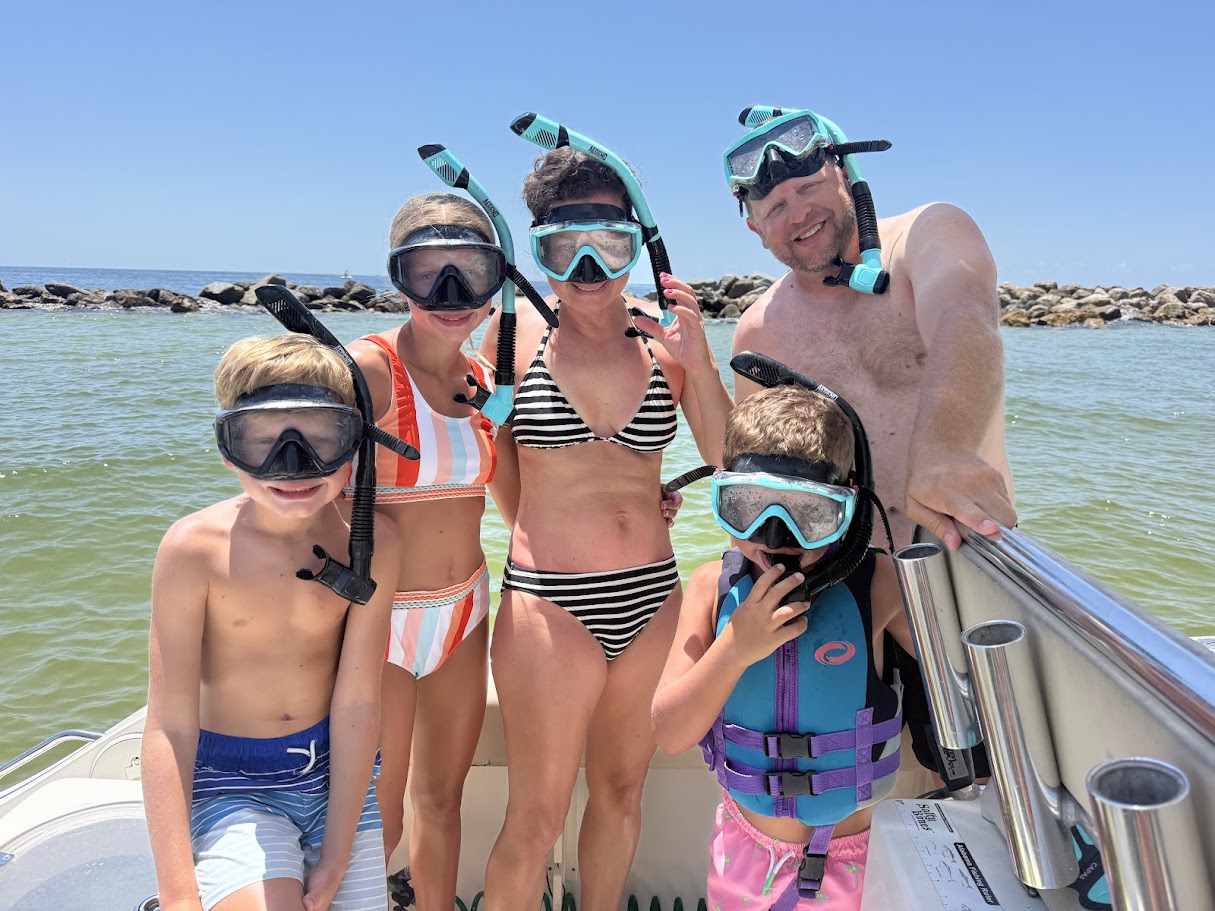
March does not quietly ease Orange Beach into spring.
It arrives in waves.
A warm front sweeps across the coast, temperatures climb, and the afternoons suddenly feel perfect. Then another cold front pushes through, the wind shifts, and winter reminds everyone that it has not completely surrendered. The difference between one week and the next can feel dramatic, but each warm spell lasts a little longer than the one before it.
Along the Gulf Coast, an old sign of the season is beginning to appear.
When the dogwoods start blooming, spring has sprung.
Longer days bring new energy to the coast. Marshes begin turning greener, baitfish become more active, birds prepare for their spring movements, and life throughout the Gulf begins responding to the warming water. The beaches slowly start filling again as spring-break visitors arrive from different parts of the country, offering Orange Beach its first real taste of the busy season.
March can also produce some incredible fog.
Warm, humid air moving across cooler bays and nearshore Gulf water can create enormous fog banks that seem to swallow the coastline. Boats disappear into the haze, waterfront buildings fade from view, and the entire coast can take on an almost mysterious appearance until the sun and wind finally begin clearing the air.
Beneath the surface, everything is moving.
Sheepshead gather around nearshore reefs, gas platforms, rock piles, and other hard structure for their annual spawning season. Some days, the fish are so concentrated and aggressive that it feels as though they would eat almost anything lowered in front of them. This is the best opportunity of the year to catch a true giant—a heavy, battle-scarred breeder weighing more than ten pounds.
Far offshore, giant yellowfin tuna continue roaming the deep Gulf, while warming inshore waters begin shifting fish out of their winter patterns. March is not yet the full spring migration, but it is the month when the first pieces begin falling into place.
The human rhythm changes too.
Snowbirds begin heading home, spring-break families take their place, restaurants grow busier, traffic briefly feels like summer, and the Blue Angels return another familiar sound to the Gulf Coast sky. The crowds may come and go in waves, but the quiet still returns between them.
March is a month caught between two seasons.
Winter keeps trying to hold on.
Spring keeps pushing forward.
And little by little, spring breaks through.
March at a Glance
March is when Orange Beach begins coming back to life.
Dogwoods bloom, daylight stretches farther into the evening, spring-break families begin arriving, and warmer water starts waking up the entire coastal ecosystem. Winter has not completely disappeared, though. Warm, beautiful stretches can quickly be interrupted by cold fronts, strong winds, rain, or enormous banks of coastal fog.
The result is a month that can feel completely different from one week to the next.
For anglers, March is one of the most anticipated months of the year. Spawning sheepshead gather in huge numbers around nearshore reefs, gas platforms, rock piles, bridge pilings, and other hard structure. Offshore, giant yellowfin tuna remain a premier target, while inshore fish begin responding to the steadily warming water.
| Category | Rating |
|---|---|
| ☀️ Beach Days | ★★★★☆ |
| 🌊 Swimming | ★★☆☆☆ |
| 🎣 Fishing | ★★★★★ |
| 🐬 Dolphin Activity | ★★★★☆ |
| 💧 Water Clarity | ★★★★☆ |
| 🪼 Jellyfish Risk | ★☆☆☆☆ |
| 🌿 Seaweed Risk | ★☆☆☆☆ |
| ✈️ Blue Angels | ★★★☆☆ |
| 🚤 Boating | ★★★☆☆ |
| 👨👩👧👦 Family Vacations | ★★★★☆ |
| ❤️ Couples Getaways | ★★★★☆ |
| 💰 Overall Value | ★★★★☆ |
Monthly Snapshot
Average High: 68–72°F
Average Low: 50–54°F
Average Gulf Water Temperature: 63–66°F
Average Rainfall: About 5–6 inches
Average Daylight: Around 12 hours
Typical Conditions: Rapid temperature changes, frequent wind, passing cold fronts, warm springlike stretches, and occasional dense coastal fog
Best For
- Spawning sheepshead fishing
- Spring-break family trips
- Giant yellowfin tuna offshore
- Mild-weather beach walks
- Coastal fog and wildlife photography
- The return of Blue Angels activity
- Watching Orange Beach transition into spring
Captain’s Pick
Plan your March visit around the weather instead of expecting every day to look the same. A cold front may shut down boating for a day or two, but the calm window behind it can produce an incredible day on the water. For anglers, this is sheepshead season at its absolute best, with huge spawning fish gathering around nearshore structure and a legitimate chance to catch one weighing more than ten pounds.
Watch Orange Beach Come Back to Life
March is when spring begins breaking through along the Gulf Coast. Warmer afternoons, active dolphins, improving boating conditions, and major seasonal fishing movements make it an exciting time to explore Orange Beach from the water.

What March Feels Like
March feels like Orange Beach waking up one piece at a time.
The change rarely happens smoothly. One week may bring warm sunshine, light jackets, and afternoons that feel almost like summer. A few days later, a cold front pushes through, the wind begins howling, and winter makes one more attempt to reclaim the coast.
That unpredictability is part of March’s personality.
The temperature swings become more dramatic as warm Gulf air collides with lingering winter systems. Winds are often stronger, boating conditions can change quickly, and enormous fog banks sometimes roll across the bays and shoreline. On certain mornings, buildings disappear, boats fade into the haze, and familiar waterways suddenly feel mysterious and completely different.
Then the sun rises higher, the fog begins lifting, and spring reveals itself again.
Along the Gulf Coast, the blooming dogwoods have long served as a familiar sign that the season is changing. When their flowers begin appearing, locals know spring has finally arrived—even if a few cold mornings are still waiting in the forecast.
The days are noticeably longer.
Afternoon light lingers over the water, marshes begin showing more green, and the coast feels increasingly alive. Fish respond to the warming water, birds prepare for their spring movements, and wildlife throughout the bays and estuaries begins shifting out of its winter rhythm.
The beaches begin changing too.
After months of quiet shoreline, spring-break families start arriving from across the Southeast and beyond. Restaurants become busier, beach chairs reappear in the sand, and traffic offers its first brief preview of summer. The crowds often come in waves depending on school schedules, creating busy stretches followed by surprisingly quiet ones.
At the same time, the winter population begins fading away.
Many snowbirds start their journey home during March, while others remain through the end of the month or into early April. For a few weeks, Orange Beach sits between two groups of visitors—winter residents preparing to leave and spring-break travelers arriving to begin the new season.
The skies become more active as well.
The familiar sound of the Blue Angels signals another transition along the coast, adding energy to a month already defined by movement and change. Their return feels like another announcement that winter is ending and the Gulf Coast is preparing for what comes next.
March does not feel fully like spring or winter.
It feels like both seasons fighting for control.
But with every blooming dogwood, every longer evening, and every warm afternoon on the beach, spring gains a little more ground.
Captain’s Insight
March is one of those months when you have to take the weather one day at a time. You might leave the dock in thick fog, spend the afternoon under a bright blue sky, and wake up the next morning to a strong north wind. But when you catch one of those calm, warm spring days, it can be one of the most beautiful times of the entire year to be on the Gulf Coast.
Weather & Gulf Conditions
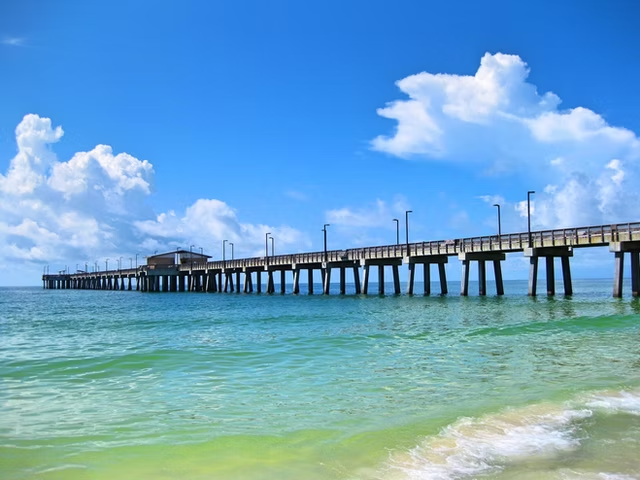
March brings some of the year’s most changeable weather to Orange Beach.
Spring is pushing north, but winter has not completely released its grip on the Gulf Coast. Warm, humid air regularly moves inland from the Gulf while cold fronts continue dropping into the region from the northwest. When those two air masses begin trading places, temperatures, winds, visibility, and boating conditions can change remarkably fast.
A beautiful stretch of spring weather may bring warm afternoons, light southerly breezes, and people relaxing on the beach. Then a cold front arrives, the wind shifts, and temperatures fall sharply behind it. Conditions that felt almost like summer one afternoon can feel like winter again the following morning.
Wind becomes one of March’s defining features.
As temperatures begin changing across the region, weather systems become more active and pressure differences can produce long stretches of stronger wind. Southerly winds ahead of a front may build seas offshore and push water into the bays. Once the front passes, winds often swing north or northwest, bringing cooler, drier air and creating rough, choppy conditions across open stretches of water.
This makes March boating highly dependent on timing.
Some days are absolutely beautiful, with calm water, comfortable temperatures, and bright spring sunshine. Other days are better spent enjoying Orange Beach from shore. Visitors planning a dolphin cruise, fishing trip, or recreational boat day should remain flexible and pay close attention to the marine forecast rather than judging conditions from the beach alone.
March can also create enormous coastal fog banks.
This usually happens when warm, moisture-filled air moves across bays and nearshore Gulf water that is still relatively cool from winter. The air near the surface cools to its saturation point, creating thick fog that can dramatically reduce visibility. At times, the fog appears as a solid wall moving across the water, swallowing boats, bridges, buildings, and entire sections of shoreline.
These foggy mornings can be beautiful, but they demand respect.
Visibility on the water may drop quickly, making navigation difficult even for experienced boaters. Fog can also linger longer over the bays and Gulf than it does farther inland, especially when winds remain light. Boaters should slow down, use navigation lights, monitor their electronics, and avoid taking unnecessary chances when visibility becomes limited.
Cold fronts often provide the reset.
Once a front clears the area, the fog disappears, humidity drops, and deep blue skies return. The first day behind a strong front may still be too windy for comfortable boating, but the calmer period that follows can produce some of March’s finest weather.
Packing for March requires preparation for more than one season.
Short sleeves may be perfect during a warm afternoon, while a jacket can feel essential before sunrise or after a front passes. Anyone spending time on a boat should bring an additional layer because moving across open water often feels considerably cooler than standing onshore.
March weather rarely stays the same for long.
That unpredictability can occasionally disrupt plans, but it is also what makes the month so fascinating. Every cold front brings winter one step closer to its end, and every warm spell allows spring to take a little more control.
Did You Know?
The enormous fog banks seen around Orange Beach in late winter and early spring are often a form of advection fog. They develop when warm, humid air moves across cooler water and becomes chilled enough for its moisture to condense into tiny suspended droplets.
Captain’s Insight
March is not the month to look at the weekly forecast once and assume your plans are set. Conditions can change quickly, especially on the water. Watch the wind direction, pay attention to approaching fronts, and stay flexible. When the right weather window opens, March can deliver an absolutely beautiful day on the Gulf.
Water Clarity
March is a transition month for water clarity in Orange Beach.
Some days still resemble the heart of winter, with brilliant emerald water, excellent visibility, and a clean shoreline stretching toward the horizon. Other days bring strong wind, rough surf, or darker water influenced by river discharge and suspended sediment. The water can change dramatically from one week to the next—and sometimes from one side of Perdido Pass to the other.
Early March often holds onto winter’s clarity.
Gulf temperatures remain relatively cool, biological activity is only beginning to increase, and calm periods between cold fronts can allow suspended particles to settle. When several dry days line up with light wind and favorable currents, the nearshore Gulf can look exceptionally clear.
Then spring weather begins taking control.
March is frequently windy, and shallow coastal water responds quickly when waves build. Sand and fine sediment are stirred from the bottom, reducing underwater visibility even when the water itself is healthy. This is why the Gulf may appear cloudy or sandy during rough conditions and then clear surprisingly fast once the wind settles.
Rainfall also plays an important role, but the rain falling directly over Orange Beach is only part of the story.
The Mobile Bay watershed drains an enormous portion of the Southeast before that water eventually reaches Mobile Bay and the northern Gulf. Heavy rain far inland can increase river flow and carry sediment downstream days or even weeks after local skies have cleared. Visitors may arrive during beautiful weather and still find darker water near the mouth of Mobile Bay because the true source of the runoff occurred hundreds of miles away.
Wind direction and currents determine where that water travels.
At times, cleaner Gulf water moves toward the shoreline and creates the emerald color visitors hope to see. Under a different wind and current pattern, darker bay-influenced water may spread along sections of the beach. Conditions can vary noticeably between Gulf Shores, Orange Beach, Perdido Pass, and the waters farther east.
The warming season is beginning beneath the surface as well.
Longer days and rising water temperatures gradually increase biological activity throughout the estuary. Plankton, algae, baitfish, and countless microscopic organisms begin responding to spring. This growing productivity is essential to the coastal food web, although it can sometimes make the water appear less transparent than it did during the coldest part of winter.
That does not mean March water is poor.
Far from it.
March can still produce some of the most beautiful emerald water of the year, especially during calm periods following several dry days. The difference is that February’s dependable winter clarity begins giving way to the more variable conditions of spring.
Visitors hoping to see clear water should watch more than the daily weather forecast.
Recent inland rainfall, wind speed, wind direction, wave height, river flow, and the timing of the last cold front can all influence what the beach looks like on any particular day. A windy morning may produce cloudy surf, while the protected waters behind an island or inside a bay remain noticeably clearer.
March teaches an important lesson about the Gulf Coast.
Water clarity is never controlled by one simple factor. It is the result of an enormous living system connecting inland rivers, Mobile Bay, coastal winds, tides, currents, and the open Gulf.
When those pieces align, March can be spectacular.
Did You Know?
Water that looks cloudy after a windy day is often filled with naturally suspended sand or sediment rather than pollution. Once waves decrease and the bottom stops being disturbed, those particles can settle and visibility may improve quickly.
Captain’s Insight
March is one of those months when I never judge the water by what it looked like yesterday. A front, a wind shift, or a change in current can completely transform the beach. Give the Gulf a calm day after the wind settles, and it may surprise you with some of the prettiest emerald water of the entire spring.
Dolphins & Wildlife
March marks the beginning of a major seasonal shift for wildlife in Orange Beach.
Winter patterns have not completely disappeared, but longer days and gradually warming water begin sending signals throughout the coastal ecosystem. Baitfish become more active, birds prepare for migration, marshes regain their color, and animals that spent the colder months conserving energy begin responding to the return of spring.
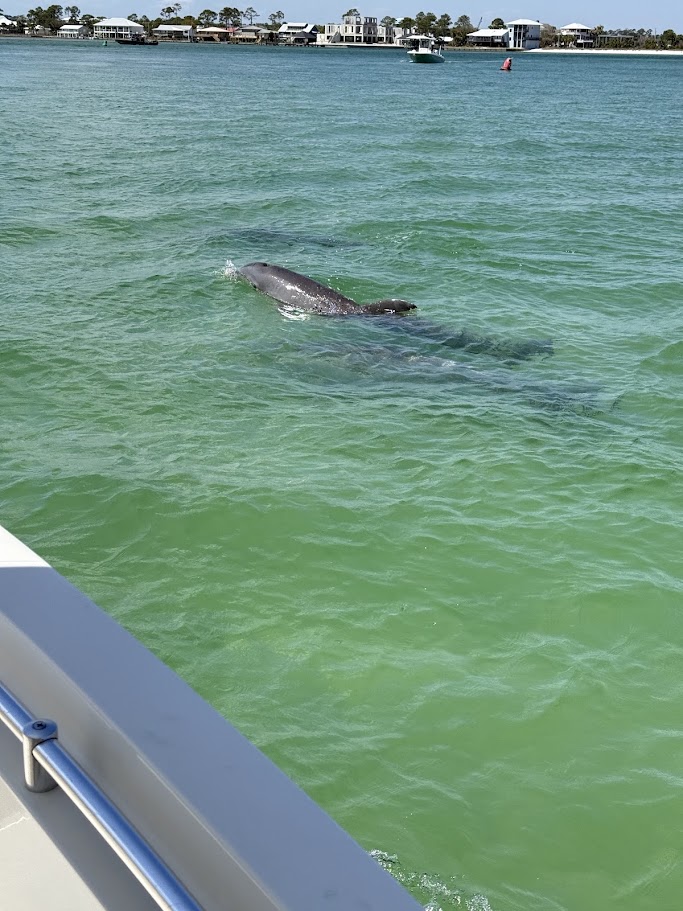
Bottlenose dolphins remain active throughout the back bays, rivers, bayous, and coastal waters.
These dolphins live along the northern Gulf Coast year-round, but their daily movements change as food moves. During winter, bait is often concentrated in deeper rivers and protected waterways. As March warms the bays, baitfish begin spreading into new areas, and the dolphins follow them.
This can make dolphin activity less predictable than it was during the coldest part of winter.
One day, a group may be feeding deep inside the back bays. The next, warming water, changing tides, or shifting bait may draw them closer to the passes and open Gulf. Experienced captains rarely search the same exact route every day. They watch the birds, tides, currents, and bait activity for clues about where the dolphins may be feeding.
Spring bird migration also begins gaining momentum.
Alabama’s barrier islands, marshes, forests, and coastal refuges provide essential resting and feeding habitat for birds traveling north. March is only the beginning of this movement, with the largest waves often arriving later in spring, but attentive birdwatchers may begin noticing new species appearing as the month progresses.
Dauphin Island and the Fort Morgan Peninsula are especially important during migration.
For birds crossing the Gulf, these coastal areas can provide the first available places to land, rest, and feed after a long flight. Weather plays a major role in what visitors see. A strong southerly wind may help birds continue inland, while an approaching front can cause more of them to stop along the immediate coast.
Bald eagles remain active around the bays, rivers, and coastal forests.
Their nesting season is still underway, and adults may be seen hunting over open water or carrying food toward nesting areas. Ospreys, brown pelicans, herons, egrets, cormorants, and shorebirds also remain common sights throughout the Orange Beach waterways.
March wildlife often feels like it is waiting for a starting signal.
The major spring movements have not fully arrived, but preparations are happening everywhere. Fish are leaving their deepest winter holding areas. Birds are beginning their journeys. Insects reappear during warm spells, vegetation starts growing again, and the marsh becomes noticeably greener from one week to the next.
The beaches become more active too.
More people return to the shoreline, shorebirds move between feeding areas, and dolphins may occasionally be spotted just beyond the breakers. Jellyfish and seaweed usually remain relatively minor concerns compared with the warmer months, although changing winds and currents can always bring temporary surprises.
March is not the peak of the Gulf Coast’s spring wildlife season.
It is the beginning of the transformation.
By the end of the month, the coast feels more alive than it did just a few weeks earlier, and nearly every part of the ecosystem is preparing for the larger movements that April will bring.
Did You Know?
Many migratory birds travel across open sections of the Gulf of Mexico before reaching the Alabama coast. Barrier islands and undeveloped coastal habitats can provide critical places to rest and rebuild their energy before continuing north.
Captain’s Insight
March is when I start noticing the little changes. The dolphins begin using different areas, birds appear that were not around a few weeks earlier, and the marsh slowly turns green again. The big spring movement is still coming, but you can tell the entire Gulf is getting ready.
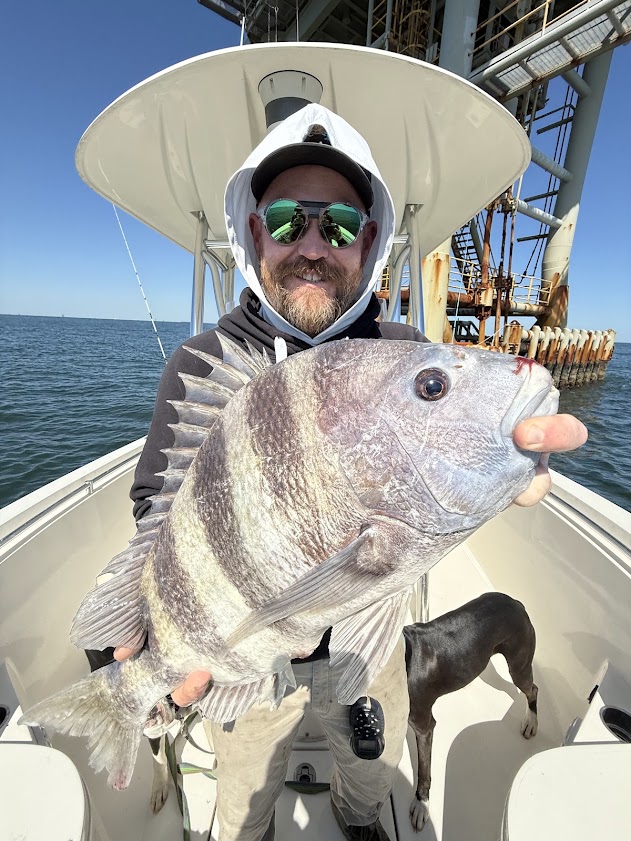
Fishing in March
March belongs to the sheepshead.
Throughout most of the year, these black-and-silver striped fish are scattered around bridge pilings, docks, jetties, oyster reefs, and other structure throughout the bays. As spawning season arrives, however, large numbers begin gathering around nearshore reefs, rock piles, gas platforms, wrecks, and other hard structure outside the passes.
When the movement reaches its peak, the fishing can be incredible.
Sheepshead that are normally famous for stealing bait without touching the hook suddenly become far more aggressive. Once a productive piece of structure is located, the action can become almost nonstop. On the best days, it feels as though the fish would eat a bare hook—although shrimp, fiddler crabs, oysters, barnacles, and other natural baits remain the dependable choices.
This is also the best opportunity of the year to catch a true giant.
Most sheepshead encountered around Orange Beach are respectable fish, but the spawning run brings some exceptionally large breeders into predictable areas. Fish weighing more than ten pounds are possible, and their deep bodies, heavy shoulders, and stubborn power make them completely different animals from the smaller fish commonly caught around inshore docks.
A giant sheepshead may not make a long, blistering run like a tuna, but it does not need to.
Hook one beside a gas platform, reef, or bridge piling, and its first move is usually straight toward the nearest barnacle-covered structure. The fight becomes an immediate test of strong tackle, quick reactions, and whether the angler can turn the fish before the line is cut.
The bite itself creates another challenge.
Sheepshead have powerful front teeth for cutting and scraping, followed by crushing teeth designed to break apart shells and hard-bodied prey. They can remove bait with surprising precision, leaving an angler staring at an empty hook without ever feeling a proper strike. A sensitive rod, minimal weight, a sharp hook, and close attention to the line often make the difference.
During the spawning run, though, everything becomes easier.
The fish are concentrated, competition increases, and the bites frequently become more decisive. This makes March an excellent month for introducing children and less experienced anglers to nearshore fishing—as long as weather and sea conditions allow a safe trip.
Finding the fish is only part of the equation.
March wind can make nearshore fishing difficult, especially when strong southerly flow builds seas ahead of a front or a north wind creates steep, uncomfortable chop after it passes. Thick fog may also reduce visibility around the passes and nearshore platforms. The best fishing often occurs during the calmer windows between weather systems, making flexibility especially important.
Inside the bays, the warming water begins changing the winter pattern.
Speckled trout gradually spread away from their deepest cold-weather holding areas. They may still retreat into deeper rivers and channels following a strong front, but several warm afternoons can draw them toward shallower banks, creek mouths, and areas holding active bait.
Redfish remain one of March’s most dependable inshore targets.
Fish can be found along marsh edges, oyster-covered shorelines, deeper river bends, and around docks or other structure. Warm, sunny afternoons may encourage them to move into shallow water, while falling temperatures often push them back toward nearby depth.
Black drum can also appear around bridges, jetties, passes, and nearshore structure. Some of these fish grow exceptionally large, and anglers targeting spawning sheepshead occasionally hook a much heavier drum feeding in the same general area.
Surf fishing begins showing signs of spring, although conditions remain inconsistent.
Whiting, redfish, and black drum remain possible from the beach, while warming water may begin bringing the first scattered pompano opportunities of the new season. A few warm days can improve activity quickly, but another cold front may slow everything down again.
Far offshore, March remains an excellent time to pursue giant yellowfin tuna.
Yellowfin are present in the Gulf throughout the year, but late winter and early spring are known locally for producing some truly exceptional fish. Long-range boats travel deep into the Gulf to fish around offshore platforms, current edges, bait concentrations, and areas where tuna gather to feed.
A large yellowfin is one of the most demanding fish an angler can battle.
The fight may last for hours as the tuna circles beneath the boat, using its weight, speed, and endurance against the angler. Fish exceeding 100 pounds are serious opponents, while the possibility of a 200-pound-class giant makes March one of the most exciting months on the Orange Beach offshore calendar.
March fishing reflects the entire month.
Everything is moving.
Sheepshead leave their scattered winter locations and gather nearshore. Trout begin spreading from deep water. Redfish respond to warming flats. Surf species slowly begin returning, and giant tuna continue roaming the deep Gulf.
Spring fishing has not fully arrived.
But the migration has begun.
Captain’s Insight
March is sheepshead month. When those fish pile onto the nearshore gas platforms and reefs, the action can be unbelievable. This is the time to catch a true giant over ten pounds, and some of those big breeders have survived a lot of seasons to reach that size. The wind may make you wait for the right day, but when the weather lays down and the fish are there, it is some of the most fun fishing we have all year.
Almanac Note
Fishing seasons, size limits, bag limits, reef-fish rules, and federal requirements can change. Always review the current Alabama and federal regulations before targeting or harvesting any species.

Blue Angels & Aviation
March brings the first signs of another Blue Angels season to the Gulf Coast.
While the team spends most of the winter completing intensive training in California, the Blue Angels begin returning home to Naval Air Station Pensacola near the end of March. For people living along the Alabama–Florida coast, the familiar sound of the jets is another announcement that spring has arrived.
The return usually happens gradually.
March is not packed with local practices the way later spring and summer can be. Depending on the annual schedule, the first public practice in Pensacola may not occur until the final days of the month. Visitors planning a trip specifically to see the team should always check the official schedule rather than assuming they will be flying locally during a particular week.
When a March practice is scheduled, the National Naval Aviation Museum provides the best public viewing experience.
The practice demonstration is performed over the museum flight line at NAS Pensacola, allowing visitors to watch the team’s formations, opposing passes, rolls, and high-speed maneuvers from a designated viewing area. A practice generally offers much of the excitement of an air show without the enormous crowds surrounding the larger summer events.
The museum also makes the trip worthwhile even if weather interrupts the flying.
Inside, visitors can explore the history of Navy, Marine Corps, and Coast Guard aviation through historic aircraft, cockpit displays, simulators, and exhibits covering generations of naval flight. For families interested in aircraft, military history, or engineering, it can easily become a full-day experience.
Weather remains the biggest uncertainty.
March fog, strong wind, low cloud ceilings, and passing fronts can affect aviation just as dramatically as they affect boating. A practice listed on the schedule may be delayed, modified, or canceled when conditions are unsafe. This is another reason to confirm the schedule and weather before driving to Pensacola.
For Orange Beach visitors, late March is only the beginning.
The number of local practice opportunities generally increases as the season progresses, eventually leading toward the major Pensacola events that define summer along this stretch of the Gulf Coast. March simply provides the opening chapter—the first glimpse, the first roar overhead, and the first reminder that the Blues are home.
Did You Know?
The Blue Angels are officially known as the United States Navy Flight Demonstration Squadron. Their mission extends beyond performing aerial maneuvers; the team represents the professionalism, teamwork, and precision of the Navy and Marine Corps to audiences across the country.
Captain’s Insight
Hearing the Blue Angels again is one of those signs locals recognize immediately. March may only bring the first practice or two, but once that sound returns to the coast, you know winter is ending and another season is getting underway.
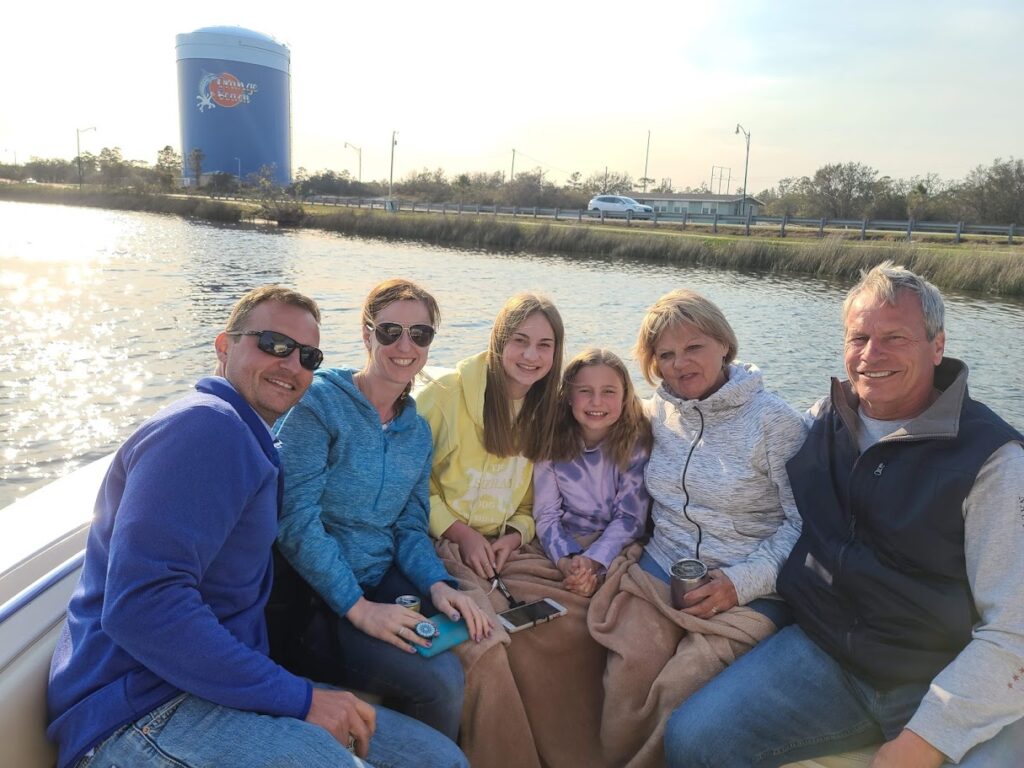
Don’t Miss This Month
March is one of the most fascinating months to experience Orange Beach because no two weeks feel exactly the same.
Spring-break families begin arriving, snowbirds prepare to head home, warm afternoons compete with late cold fronts, and life throughout the Gulf starts responding to the longer days. The weather requires flexibility, but visitors who embrace the changing conditions can experience some of the most memorable moments of early spring.
- Experience the peak of the sheepshead spawning run. March is the month to fish nearshore reefs, gas platforms, rock piles, jetties, and other hard structure for spawning sheepshead. When the fish gather in large numbers, the action can be almost nonstop, with a genuine chance to catch a giant weighing more than ten pounds. Even anglers who normally overlook sheepshead quickly understand why locals look forward to this season every year.
- Watch a giant fog bank roll across the coast. On the right morning, warm and humid air meeting cooler Gulf water can create enormous walls of fog over the bays, passes, and beaches. Watch safely from shore as boats, bridges, and waterfront buildings disappear into the haze. It is one of March’s most dramatic natural displays—and one that many visitors never expect to see in Orange Beach.
- Catch one of March’s perfect weather windows. Between cold fronts and windy stretches, March can deliver calm water, clear skies, mild temperatures, and some of the finest boating weather of the spring. Stay flexible with your plans and be ready to take advantage when the wind settles. A dolphin cruise, fishing trip, or afternoon on the water can feel especially rewarding after several days of rough weather.
- Enjoy the first real beach days of spring. The Gulf may still be chilly, but warm March afternoons bring beach chairs, sandcastles, shoreline walks, and the first brave swimmers back to the coast. The beaches feel alive again without yet carrying the constant crowds and heat of summer.
- Explore the coast as it turns green again. Walk or bike the Hugh S. Branyon Backcountry Trail, explore Gulf State Park, or travel the quieter roads beyond the beach as dogwoods bloom and the marsh begins regaining its spring color. The transformation may be subtle at the beginning of the month, but it becomes more noticeable with every passing week.
- Experience the opening waves of spring break. School schedules vary, so March crowds tend to arrive in bursts rather than all at once. Restaurants become lively, families return to the beach, and traffic provides a brief preview of summer before settling down again. It is a fun time to enjoy the energy of the busy season without committing to the full intensity of June or July.
- Listen for the return of the Blue Angels. When the team returns to Pensacola and a public practice appears on the official schedule, the roar of the jets becomes another unmistakable sign that spring has reached the coast. Practice opportunities may be limited early in the season, so visitors should confirm the schedule before making the trip.
March is a month of firsts.
The first blooming dogwoods. The first real spring-break crowds. The first warm afternoons that keep people on the beach until sunset. The first signs that fish and wildlife are leaving their winter routines behind.
Winter may still interrupt from time to time.
But by the end of March, spring has clearly taken control.
Plan Your Private March Charter
Spring weather can change quickly, but the right day in March can deliver peaceful waterways, active wildlife, and beautiful conditions along the coast. Back Bay Charters offers private trips for groups of up to six guests, with routes adjusted around the day’s weather and water conditions.
March Is Best For…
March is ideal for visitors who enjoy watching a destination come back to life.
Orange Beach is no longer as quiet as it was during winter, but it has not yet reached the nonstop pace of summer. Spring-break crowds arrive in waves, snowbirds begin leaving, beaches slowly repopulate, and the entire coast changes from one week to the next.
The weather can be unpredictable, but visitors who remain flexible are rewarded with outstanding fishing, longer days, mild afternoons, blooming landscapes, and some of the most dramatic coastal conditions of the year.
Families Visiting Orange Beach ★★★★☆
March is a strong month for family trips, especially during spring break. Warm afternoons create opportunities for beach time, dolphin cruises, biking, nature trails, and outdoor attractions without the intense heat of summer. The Gulf may still be too cold for comfortable swimming on many days, and changing weather can interrupt plans, so families should arrive with a mix of indoor and outdoor activities in mind.
Couples Getaways ★★★★☆
Couples can enjoy pleasant afternoons, waterfront dining, peaceful morning walks, and colorful sunsets before the heavier summer crowds arrive. Spring-break weeks may feel busier, but quieter stretches still offer an excellent balance of activity and relaxation.
Beach Vacations ★★★★☆
March brings the first convincing beach days of the year. Warm sunshine may have visitors relaxing in the sand for hours, although chilly water, strong wind, fog, or a late cold front can quickly change the experience. It is a great beach month for flexible travelers who value scenery and comfortable air temperatures more than guaranteed swimming.
Fishing Vacations ★★★★★
March is one of the premier fishing months on the Orange Beach calendar. Spawning sheepshead gather around nearshore structure, giant yellowfin tuna remain available offshore, redfish stay dependable, and speckled trout begin responding to warming inshore water. For anglers hoping to catch a trophy sheepshead weighing more than ten pounds, this is the month to be here.
Outdoor Enthusiasts ★★★★★
Longer days and moderate temperatures make March excellent for biking, hiking, kayaking, boating, birdwatching, and exploring Gulf State Park. Wind and passing fronts may occasionally change the plan, but the comfortable conditions between weather systems can be nearly perfect.
Photographers ★★★★★
March offers subjects that no other month can quite duplicate. Enormous coastal fog banks, blooming dogwoods, greener marshes, migrating birds, dramatic weather changes, spring-break energy, and the possible return of the Blue Angels create tremendous variety for landscape, wildlife, and aviation photography.
Budget-Conscious Travelers ★★★★☆
March can still offer good value, but prices and availability vary considerably with spring-break schedules. Travelers who avoid the busiest school-break weeks may find lighter crowds and better lodging rates while still enjoying pleasant spring weather.
Snowbirds ★★★★☆
March is the closing chapter of snowbird season. The longer days and warming afternoons make it an enjoyable final month along the coast, although many extended-stay visitors begin heading home as spring-break crowds arrive. Some remain through the end of March or into April to enjoy the transition.
March is best for travelers who do not need every day to look the same.
It rewards flexibility, curiosity, and a willingness to follow the weather. One day may bring thick fog and strong wind. The next may deliver calm emerald water, warm sunshine, and one of the finest afternoons of the entire spring.
That unpredictability is not a flaw in March.
It is what makes the month memorable.
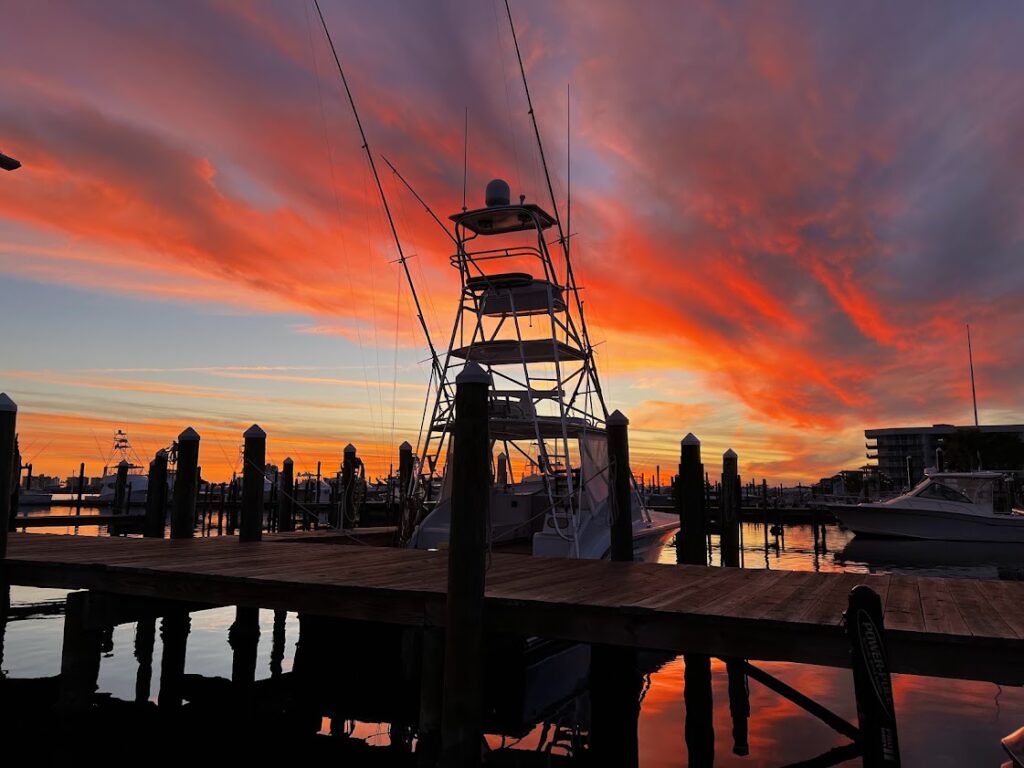
March Summary
March is when spring finally begins breaking through in Orange Beach.
The change does not happen all at once. Warm fronts bring beautiful beach days, cold fronts push winter back across the coast, and strong winds can make one week feel completely different from the next. Dense fog sometimes rolls across the bays and shoreline, while blooming dogwoods and longer evenings signal that the season is steadily changing.
Across the Gulf Coast, life begins moving again.
Marshes regain their color, baitfish become more active, birds prepare for spring migration, and dolphins begin following food into different parts of the bays and coastal waters. The largest wildlife movements are still ahead, but March sets the entire process in motion.
For anglers, this is one of the year’s most exciting months.
Spawning sheepshead gather around nearshore reefs, gas platforms, jetties, wrecks, and other hard structure, creating fast action and a genuine opportunity to catch a giant weighing more than ten pounds. Redfish remain dependable, speckled trout begin leaving their deepest winter areas, and giant yellowfin tuna continue offering a fish-of-a-lifetime challenge far offshore.
Orange Beach itself begins changing just as quickly.
Spring-break families arrive in waves, restaurants grow busier, beach chairs return to the sand, and traffic offers its first taste of summer. At the same time, many snowbirds begin heading home, creating a brief period when winter residents and spring visitors overlap.
The Blue Angels also begin returning another familiar sound to the Gulf Coast sky. Local practice opportunities may still be limited, but the roar of the jets is another sign that the quiet winter season is ending.
March rewards travelers who remain flexible.
The Gulf may be calm and emerald green one afternoon, then windy and rough after the next front arrives. A morning may begin inside a wall of fog and end beneath a brilliant blue sky. Plans may need to change, but the right weather window can produce one of the finest days of the entire spring.
Winter does not leave Orange Beach without a fight.
But with every blooming dogwood, every warmer afternoon, and every longer evening, spring gains more ground.
By the end of March, the beaches are livelier, the water is warming, wildlife is preparing to move, and the Gulf Coast is ready for the full arrival of spring in April.
About the Local Captain
Matt Swiggum is the owner and captain of Back Bay Charters in Orange Beach, Alabama. These guides combine verified public information with observations gathered from years spent boating, fishing, and helping families experience the bays, beaches, passes, dolphins, wildlife, and seasonal changes of Alabama’s Gulf Coast.
Continue Exploring the Orange Beach Almanac
Links to more Articles:
| Full-Year Guide | Previous Month | Next Month |
|---|---|---|
| Best Time to Visit Orange Beach | February in Orange Beach | April in Orange Beach |